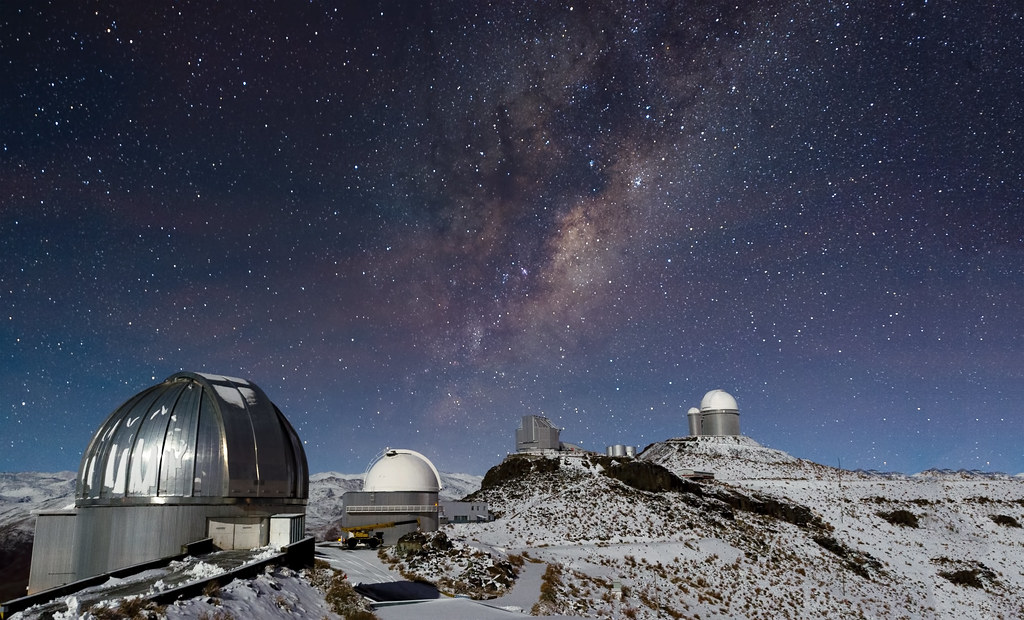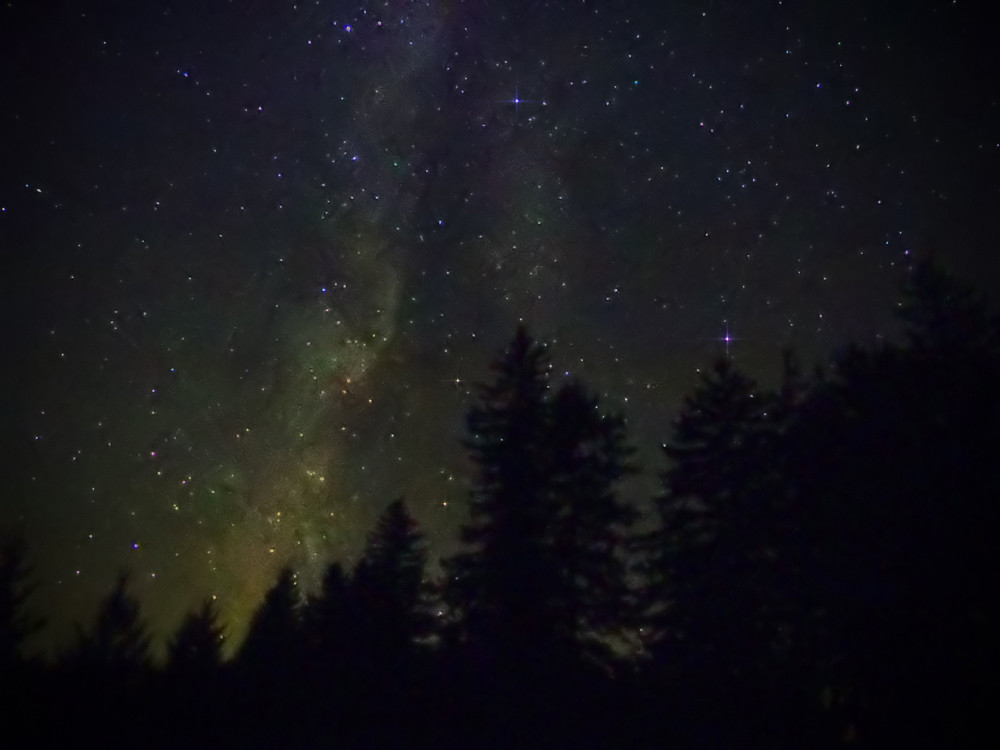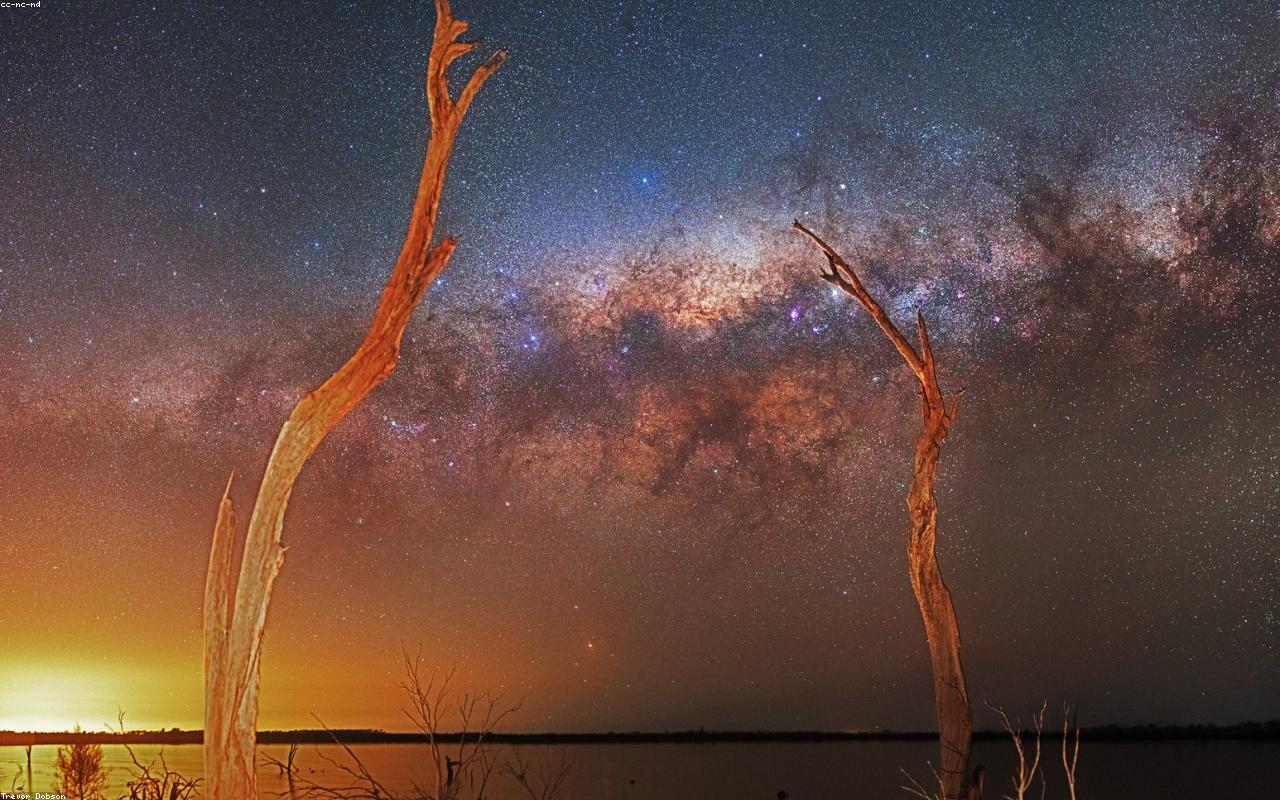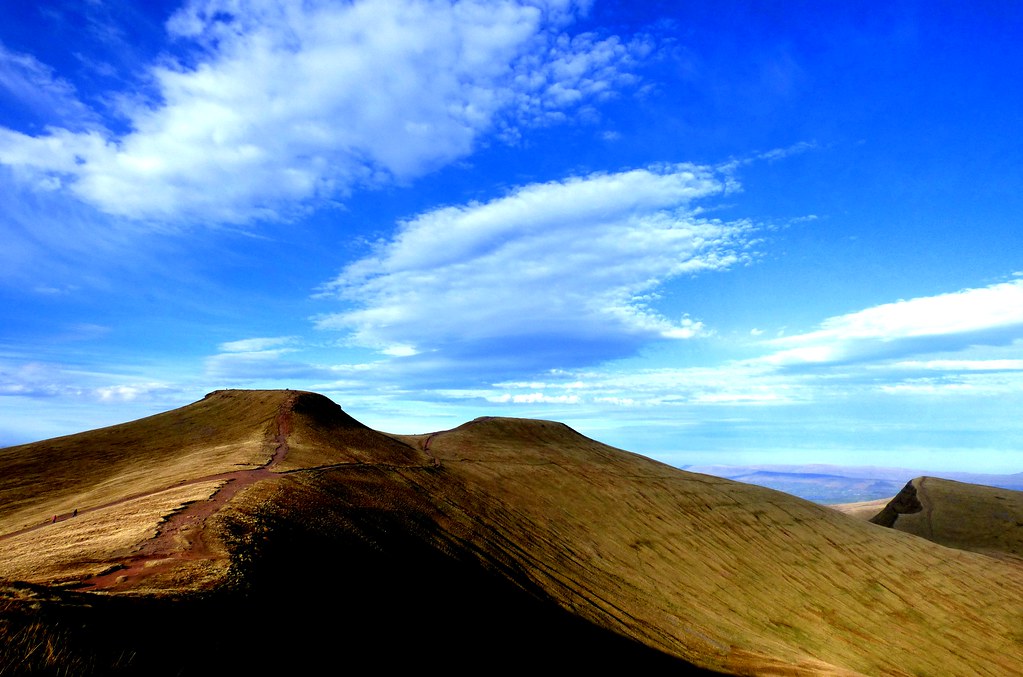
The farmhouse at Cwm Cerwyn sits four kilometres south of the A470, at an elevation of 312 metres. From the back garden, the south horizon falls away across the Usk valley, and on the rare clear night the winter Milky Way passes nearly through the zenith.
The Brecon Beacons National Park was awarded International Dark Sky Reserve status in February 2013. It was the fifth reserve in the world and the first in Wales. The core zone covers the central ridge from Pen y Fan east to the Black Mountains.
Last Light rented the farmhouse for the week of 12 to 19 January 2026, with the new moon falling on the 17th. The forecast on arrival was unpromising. A frontal system was crossing the Atlantic. Local opinion at the Tafarn y Garreg, the pub two miles up the road, was that it would clear by Wednesday.
It cleared on Thursday. The first three nights were overcast or, on Monday, briefly transparent at 03:00 in a window that closed inside ninety minutes. Observation was limited to a hasty SQM reading of 21.42 magnitudes per square arcsecond and a quick look at Orion through binoculars.
By Thursday afternoon the cloud was breaking up. By sunset, which fell at 16:42, the sky was clear from horizon to horizon. The temperature was minus two degrees Celsius and dropping. A light easterly wind cut across the valley.
Cold and clear are not always companions in the Beacons. The reserve sits in the path of moist Atlantic air. Stable cold-clear nights, of the kind one assumes for high desert work, are rare here. The local astronomy society, the Heads of the Valleys Astronomical Society, considers ten such nights a year a good return.
Thursday produced one of them. The first stars were visible by 17:30, with Vega already low in the northwest and Capella high in the east. By 18:15 the Milky Way through Auriga and Perseus was a broad pale river overhead.
The first formal SQM reading of the night, taken at 19:42 from the farmhouse garden, registered 21.61. The reference value for the Brecon Beacons core zone, established by the reserve's monitoring programme in 2013, is 21.5. Thursday was a touch better than the long-term mean.
Allan Trow, who manages the Dark Sky Wales outreach programme and who lives in nearby Penderyn, dropped by at 20:00 with a 10-inch Dobsonian on the back seat of his Skoda. He had been at a school event in Merthyr Tydfil earlier and was driving back via the long route, as he put it.
Trow's view of the reserve is unsentimental. He has spent a decade arguing with local councils about lighting retrofits and another decade explaining to amateur astronomers from England that yes, the sky here is dark, and no, it is not always clear. He keeps a tally. In 2025 he logged 38 fully clear nights and 71 partial ones.
The 10-inch Dobsonian was set up on the gravel drive by 20:30. The first target was the Orion Nebula, M42, low in the south. Through the telescope the trapezium stars were sharp and well separated, and the wings of nebulosity were visible without an OIII filter.
The Crab Nebula, M1, was harder. Trow found it in the eyepiece by star-hopping from zeta Tauri, but the contrast was poor against the still-bright winter sky in that part of Taurus. He noted that the Crab is a target where the Beacons cannot quite compete with truly dark sites at higher elevation.
By midnight the temperature had fallen to minus six degrees. The eyepieces of both Trow's telescope and the visiting 80mm refractor were fogging badly. A small dew heater, run from a USB battery pack, solved the problem for the refractor. The Dobsonian got a hood.
At 01:00 the southern horizon began to show the lights of the Heads of the Valleys towns, Merthyr and Ebbw Vale, as a thin amber line. This is the one direction in which the reserve is significantly compromised. Trow has been part of an ongoing programme to retrofit the largest installations there, with mixed results.
The Geminids, long past their peak, contributed three faint meteors between 01:00 and 02:00. A single bright Quadrantid fragment, residual from earlier in the month, crossed the northern sky at 02:14. It was the brightest object of the night.
At 02:30 Trow packed up. He had work in the morning. The visiting observer continued until 04:00, when a thin band of cloud moved in from the west and stayed.
The Friday and Saturday nights of the week were both partly clear. Friday produced a useful three-hour window centred on midnight, with SQM readings of 21.53. Saturday clouded over completely after a promising sunset.
Of the seven nights, then, two were fully usable, one was partial, and four were a write-off. This is, by local accounts, a fairly typical winter week in the reserve.
The farmhouse owner, who has rented the place to astronomers for six years, said that her American visitors are the most disappointed by the weather. Her German visitors arrive expecting it. Her Welsh visitors, she said, do not bother to check the forecast.