The Northeast Kingdom Astronomers' annual winter star party is held, weather permitting, on the second Saturday of January at a hayfield on the property of Calvin and Marta Whitmore, just outside East Burke, Vermont. The 2026 edition fell on January 10. The forecast called for clear skies, no wind, and an overnight low of fourteen below zero Fahrenheit.
Twenty-one observers came. Three brought refractors on equatorial mounts, eleven brought Dobsonians ranging in aperture from six to fourteen inches, four brought binoculars only, two brought camera setups for astrophotography, and one came with nothing but a wool blanket and a thermos.
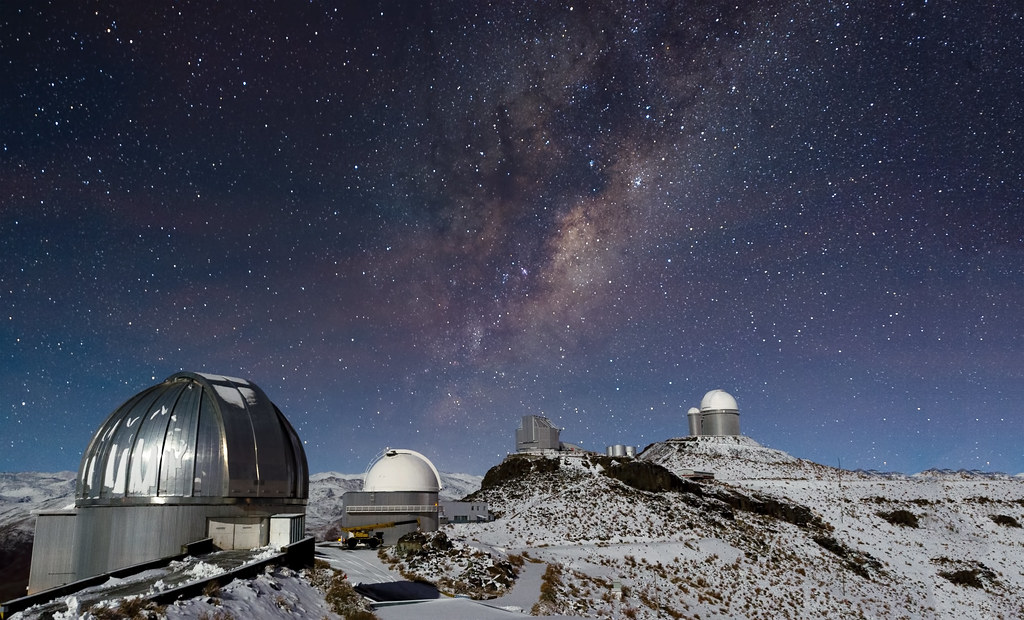
The field is roughly Bortle 3, surrounded by low ridges, and on a moonless night provides one of the better skies within a two-hour drive of Burlington. Calvin Whitmore, a retired dairy farmer, has hosted the event for nine years. His one rule is that vehicles must be off the field by 6 p.m. and headlights must be killed before leaving.
Setup began at 4 p.m. with the temperature already at three above zero. The dew shields went on the refractors as a matter of habit, although in the cold dry air they would prove unnecessary. Telescopes were left to thermally equilibrate, the slow process by which the optical surfaces and the air inside the tube reach the ambient temperature, which can take an hour or more for larger instruments.
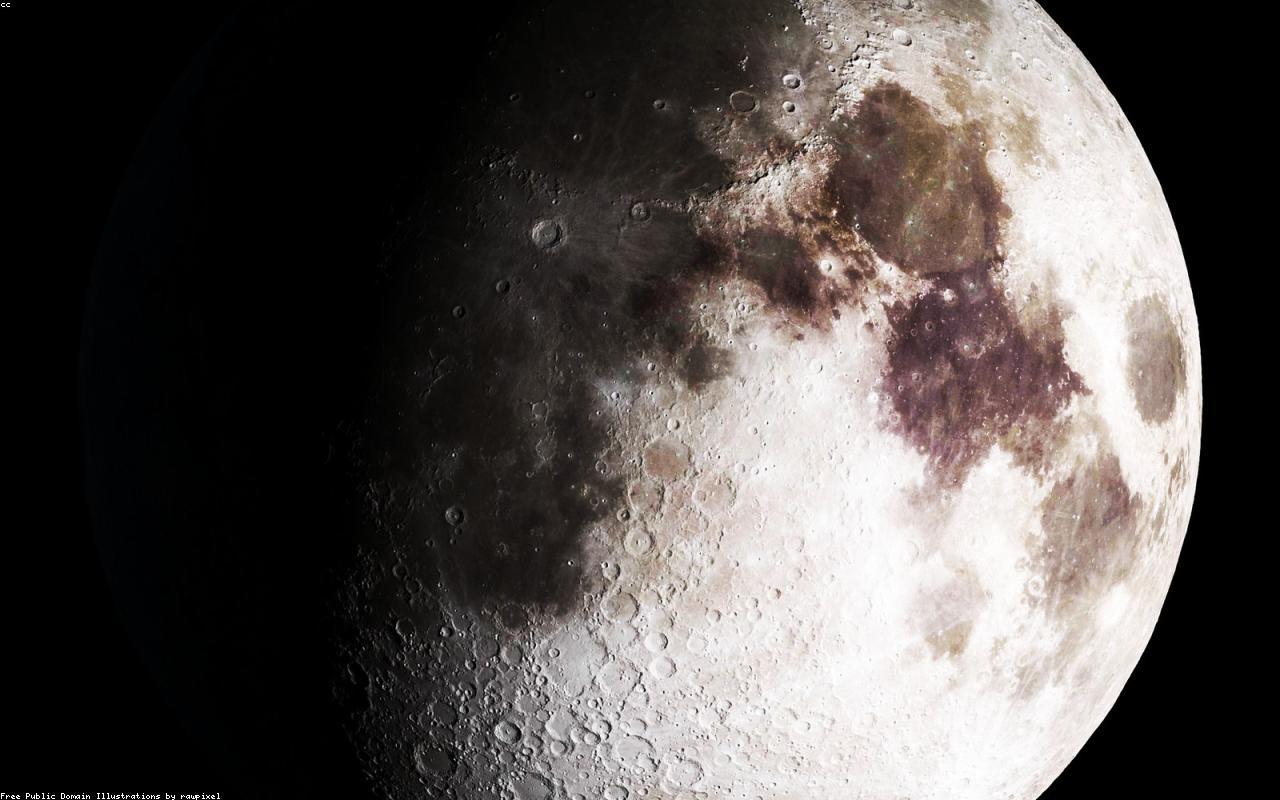
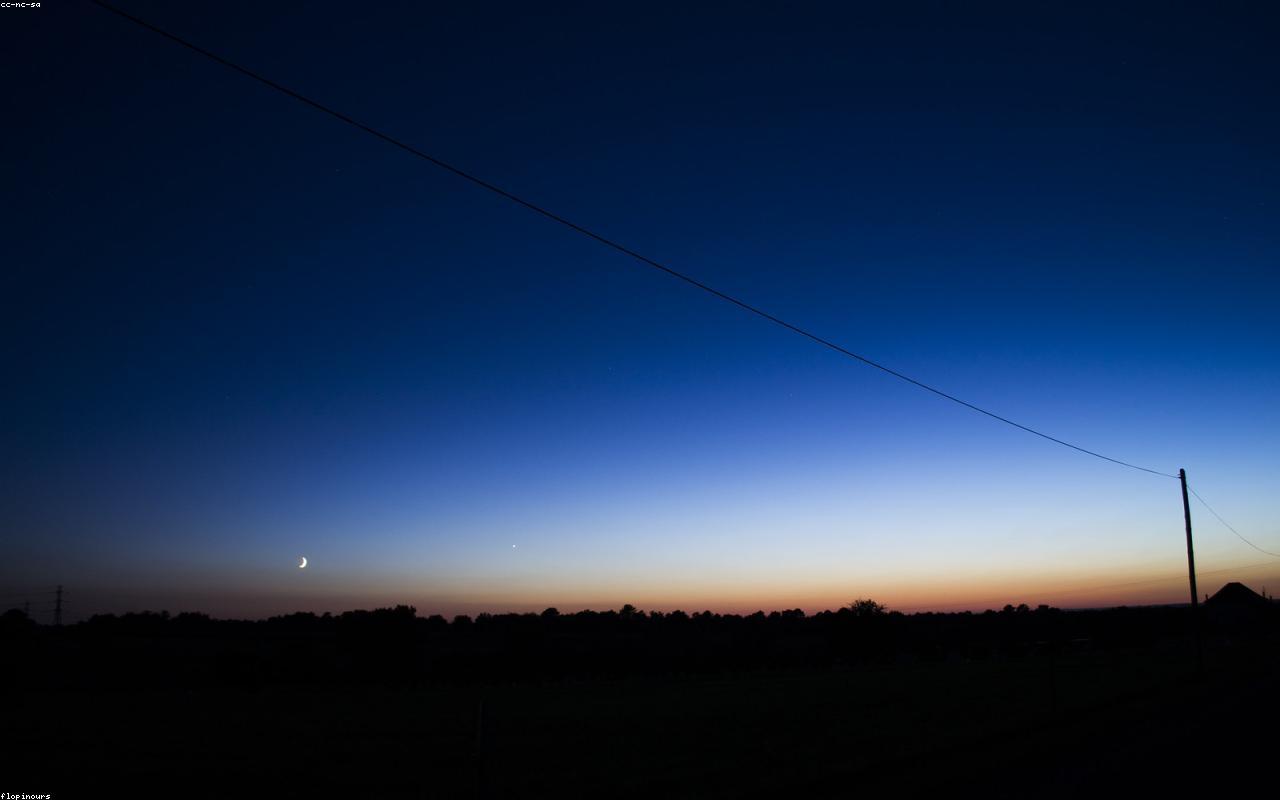
Astronomical twilight ended at 6:22 p.m. The first observers were already at their eyepieces by 6:00, on the Moon, which set at 7:14, and on Jupiter, which was high in the south in Aries.
Single-digit cold complicates star parties in several specific ways. Battery-powered electronics fail faster. Eyepieces dew over if breathed on. Bare fingers stick to metal. The observer's own breath, rising over the eyepiece, distorts the image.
Astrid Mehlhorn, a high-school physics teacher from Lyndonville, brought a six-inch Dobsonian, a battery pack she had been keeping in an inside pocket of her parka, and a pair of contact lenses she had been warned not to wear in this cold. She wore them anyway. She said her glasses fogged the moment she leaned to the eyepiece.
By 8 p.m. the temperature was at five below zero and falling. Jupiter was past the meridian. Mars was rising in the east. The Winter Hexagon, that great asterism made of Capella, Aldebaran, Rigel, Sirius, Procyon, and Pollux, was rising into the southeast.
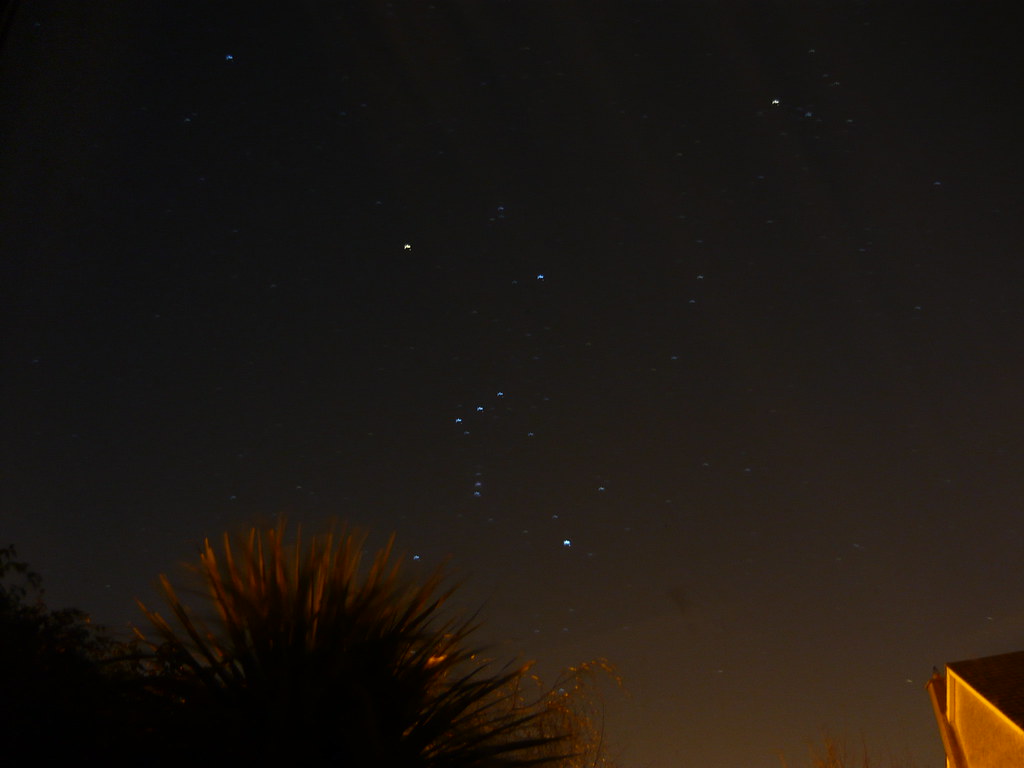
The Orion Nebula, M42, was the most-visited object of the night. Through Whitmore's own ten-inch Dobsonian, with a 24mm Panoptic eyepiece, the nebula showed the bright wing-like extensions, the dark Fish's Mouth intrusion, and at least four members of the Trapezium cluster at the heart.
A young woman who had driven up from Hanover, New Hampshire, with her father saw the Trapezium for the first time and said, distinctly, in the cold quiet, that she had not understood until then that some stars came in groups of four inside other groups.
Hand warmers were passed around at 9:30. The single observer with only a blanket and a thermos was identified as Howard Pratt, retired electrician from Saint Johnsbury, who said he was at the star party as a social occasion and not an astronomical one, and that the others should enjoy themselves.
He drank his coffee and watched the meteors. There were six during the first three hours, none from a known shower, all sporadics.
By 10:30 p.m. the temperature was eight below. Two of the four binocular observers had left. One of the two astrophotographers had packed up because of a battery failure on his autoguider. The remainder pressed on.
The Pleiades were the second most-visited object, particularly through wide-field binoculars and the 80mm refractors. The cluster, in winter dry air with no humidity to soften it, is a sharper object than at any other season. The faint nebulosity around the brightest members, the dust through which the cluster is passing, was reported by several observers, though always tentatively.
M81 and M82, the bright pair of galaxies in Ursa Major, were the third popular target. Both were comfortably bright through ten-inch and larger Dobsonians. The cigar shape of M82 was clear, with hints of the dust lane that crosses its centre.
At midnight the temperature reached eleven below zero. Marta Whitmore brought out a pot of hot chocolate from the farmhouse, which she set on a tailgate next to a stack of disposable cups. Seven observers remained on the field.
By 1 a.m. it was fourteen below and the cold had become a felt presence rather than a number. Telescopes were beginning to behave oddly. The focuser on a Schmidt-Cassegrain belonging to a man from Sherbrooke, Quebec, had frozen and would not turn. The eyepiece grease in two of the older Plössls had thickened to the point of resistance.
Calvin Whitmore went home at 1:15 a.m. with his ten-inch. He said the sky was as good as he had ever seen it, and that he was no longer young enough for the cold.
Three observers stayed until 4 a.m., when the temperature had risen, in a small mercy, back to ten below. They saw Saturn rise around 3:20 a.m. They saw the false dawn begin around 5:30. They saw, in the words of one of them, more than they had any right to expect.
The 2026 winter star party logged forty-seven distinct objects on the field across the night, which is in the normal range for this event.
There is a particular character to winter observing in single-digit cold. The air is dry, the seeing is steady, the stars do not twinkle as much as they do in summer. The cost is the cold itself, which is not romantic and which removes most observers from the field within a few hours.
What remains, for those who stay, is a kind of distilled astronomy, in which the people on the field are the people who really wanted to be there.