On the night of 13 December 2025, the temperature in the upper pasture of Hannah Rowe's farm outside Craftsbury, Vermont, dropped to minus eighteen Celsius. Five observers stood or sat in the snow for three hours and counted Geminids.
Cosmo Tate had driven up from Cambridge two days earlier with a wool sleeping bag, four hand warmers, and a thermos of black coffee that froze before midnight.
The group was assembled by the Northeast Kingdom Astronomy Club, which has run an annual Geminid observation at the Rowe pasture since 2014. The pasture sits at six hundred and thirty metres on the western shoulder of Bear Mountain, with a Bortle 2 sky overhead and no significant artificial light within seven kilometres.
The Geminids are, by most measures, the strongest annual meteor shower. Maximum zenithal hourly rates regularly exceed one hundred and twenty, and in some recent years have approached one hundred and fifty.
Unlike the Perseids, the Geminids favour the small hours of the morning by only a modest margin. The radiant rises in early evening, and useful observation begins as soon as the sky is fully dark.
This is the shower's gift to families with children and to observers who cannot reasonably stay up until four in the morning. A 9 p.m. start in December still produces respectable counts.
Tate's first night, 12 December, produced forty-one Geminids in a single hour between 11 p.m. and midnight, observed by all five members of the group and tallied collectively. By the second night, the official peak, the hourly rate climbed to ninety-three.
The cold is the variable that most outsiders fail to plan for. A Geminid observer in northern New England in mid-December can reasonably expect ambient temperatures between minus ten and minus twenty Celsius, with wind chills colder still.
Hannah Rowe's preparation begins in October. She lays heavy hay bales on the upwind side of the observing area to break the prevailing northwest wind, and she keeps a propane stove and a kettle in a small canvas tent fifty metres away.
Each observer brings their own sleeping bag rated to at least minus twenty, and a closed-cell foam pad. Wool socks, a balaclava, and over-mittens with chemical hand warmers inside complete the kit.
The single most important rule, Rowe says, is that no observer stays out longer than ninety minutes without a thirty-minute warm-up in the tent. Hypothermia is a real risk even for clothed observers, because the activity of meteor watching involves no muscular exertion to generate heat.
Tate, who normally writes about observatories, found the experience instructive. The pasture is not equipped, the chairs are folding camp chairs, and the only optical instruments in use are two pairs of binoculars and one small refractor for the planet Jupiter, which stood near the meridian during the observation.
The Geminids' parent body is the unusual object 3200 Phaethon, an asteroid that approaches the sun more closely than any other named asteroid and is suspected of being a dormant or extinct comet. The debris stream it sheds is denser and slower than that of most cometary showers, which gives Geminids their characteristic bright, slow, and often coloured appearance.
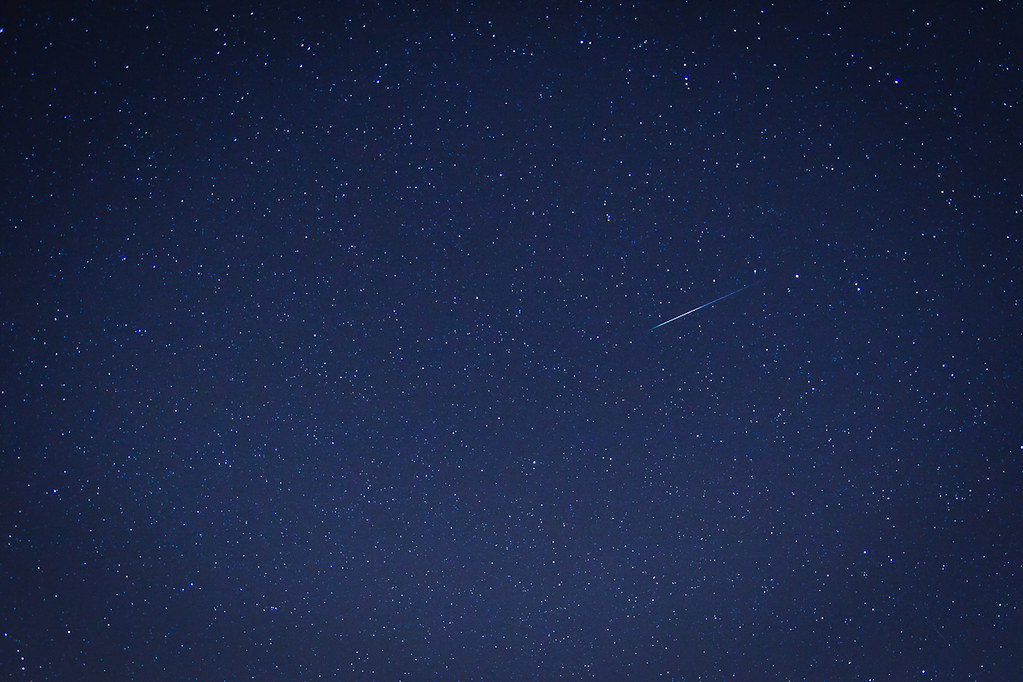
Several observers in the Craftsbury group reported orange, yellow, and one distinctly green Geminid on the second night. The green meteor, observed by all five and confirmed by a camera in a fence post, was logged at 1:14 a.m. and travelled from northeast to southwest across roughly thirty degrees of sky.
Tate's notebook entry for the moment reads, in pencil softened by cold. Long train, green, persistent two seconds. Group cheer audible from pasture.
The cheer is, in Tate's reading, the most underreported feature of group meteor observation. The shared event creates a small, spontaneous social experience that solitary observers do not have, and it is a meaningful counterweight to the cold.
By 2 a.m. on the second night the group had counted three hundred and twelve Geminids cumulatively. The third night was clouded out, and the observation was abandoned in favour of a long supper at Rowe's kitchen table.
The supper, in Tate's account, is the part of the Craftsbury tradition that has kept the group returning for twelve seasons. Rowe served a venison stew, baked potatoes, and a strong black coffee that the observers drank standing by the woodstove.
The Geminids will continue to strengthen as the parent debris stream is shepherded by Jupiter into denser concentration. Forecasts for the late 2020s suggest peak zenithal hourly rates that may approach one hundred and seventy.
Tate's small recommendation, for any reader contemplating a serious cold-weather Geminid observation, is to find a Hannah Rowe. The shower rewards group observation, the cold rewards group warmth, and the long night, in his experience, rewards the kind of unhurried hospitality that is hard to manufacture alone.