The eyepiece case on the upper shelf of Iolanda Ferro's small observatory shed in the hills above Naples is a foam-lined Pelican 1300, purchased in 2007, with eleven foam cutouts and eleven eyepieces in them. In April 2026, after a clear-sky run of nine consecutive nights, Ferro opened the case in afternoon light, set the eyepieces on her workbench, and asked herself, honestly, how often she had used each one in the previous twelve months.
The answer was uncomfortable.
Four eyepieces had been used on more than fifty nights. Three had been used between five and twenty. Four had not come out of the case at all in 2025 or in the first quarter of 2026.
The four eyepieces in regular use were a 24-millimetre Tele Vue Panoptic, a 14-millimetre Tele Vue Delos, an 8-millimetre Tele Vue Delos, and a 5-millimetre Tele Vue Nagler Type 6. The three in occasional use were a 32-millimetre Plossl, a 17.5-millimetre Morpheus, and a 4.7-millimetre Ethos. The four unused were a 12.5-millimetre Ortho, a 10-millimetre Plossl, a 6-millimetre Ortho, and a 2x Barlow purchased in 2011 and unwrapped, by Ferro's recollection, fewer than five times.
The exercise was not new. Working amateur astronomers, in published reflections on their own collections, tend to converge on the same finding: an observer needs fewer eyepieces than they own, and the eyepieces they use settle into a narrow range of focal lengths spaced by a factor of roughly 1.6 to 2.0.
Ferro's working set is spaced almost exactly that way. The 24-millimetre and the 14-millimetre differ by a factor of 1.7. The 14-millimetre and the 8-millimetre differ by 1.75. The 8-millimetre and the 5-millimetre differ by 1.6. The set provides, in her 102-millimetre f/9.8 achromat, magnifications of 42x, 71x, 125x, and 200x. The exit pupils run from 2.4 millimetres at low power to 0.5 millimetre at high power. These are the magnifications she actually uses.
The first eyepiece, the 24-millimetre Panoptic, is the deep-sky workhorse. Its 68-degree apparent field of view, combined with the long focal length, produces a true field of 1.6 degrees at 42x. The Andromeda Galaxy fits inside that field with room around it. The Pleiades fit. The Veil Nebula divides into its two halves. Ferro estimates that she uses the Panoptic for sixty percent of her observing time.
The 14-millimetre Delos at 71x is the planetary low-power eyepiece and the eyepiece of choice for smaller deep-sky objects. The Ring Nebula, the Dumbbell, the brighter globular clusters, the open clusters in Cassiopeia, all reward the 71x magnification with detail that 42x does not deliver.
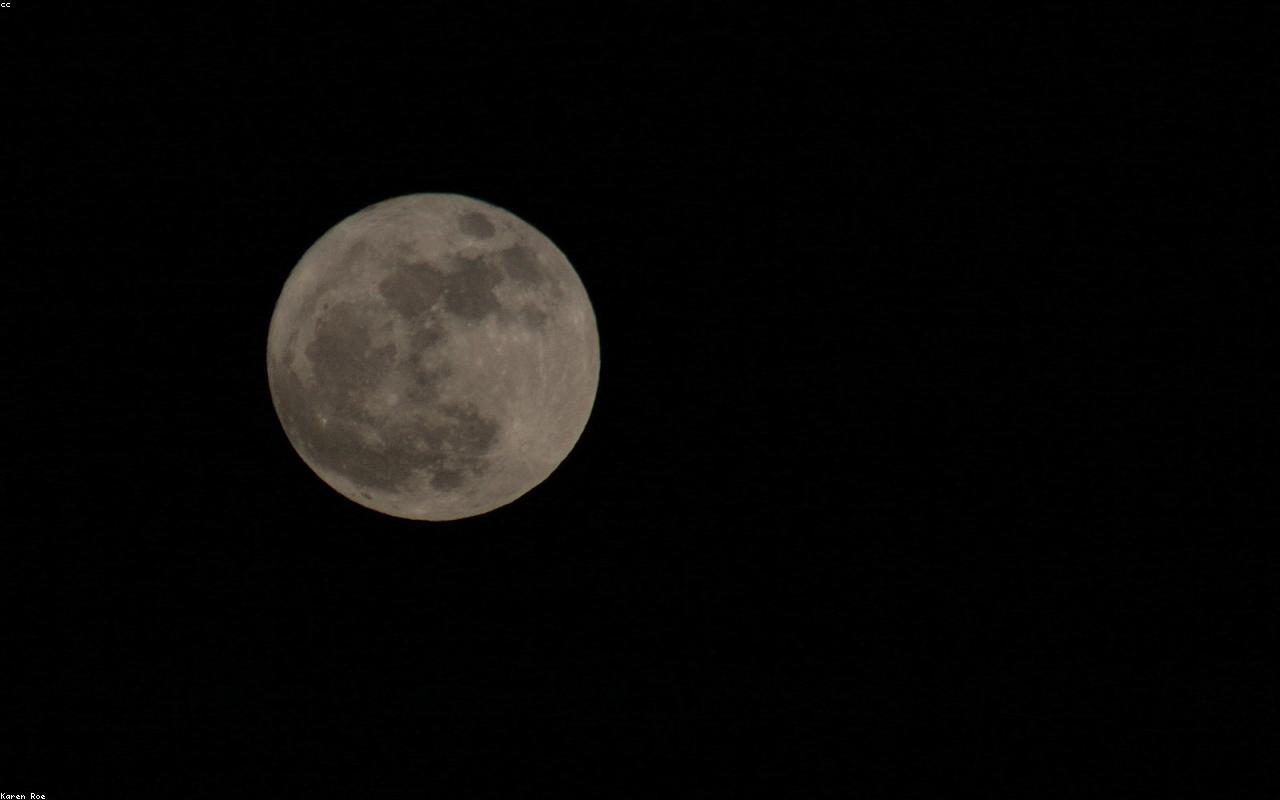
The 8-millimetre Delos at 125x is the lunar and planetary mid-power eyepiece. At this magnification, Jupiter shows the equatorial belts and the festoons. Saturn shows the rings and the Cassini Division. The moon shows lunar mountains in startling relief along the terminator.
The 5-millimetre Nagler at 200x is reserved for nights of steady seeing, of which Ferro records, in her log, between fifteen and twenty per year from her site. On those nights, the eyepiece reveals planetary detail that justifies its purchase price several times over. On most nights, the seeing limit makes 200x soft and the 8-millimetre eyepiece is the better choice.
These four eyepieces, in 2026, can be purchased new for between three and four thousand euros total. Ferro accumulated them over fourteen years, beginning with the Panoptic in 2008 and ending with the 5-millimetre Nagler in 2022. The case in which they live cost a hundred and forty euros and has paid for itself in protected glass.
The three occasional eyepieces have specific uses. The 32-millimetre Plossl is the eyepiece for the lowest possible magnification, used perhaps four times a year when Ferro wants the widest true field her telescope can produce. The 17.5-millimetre Morpheus is a backup for the Delos in case of damage. The 4.7-millimetre Ethos is, by Ferro's admission, an indulgence; she bought it in 2018 and uses it on exceptional planetary nights.
The four unused eyepieces are the more interesting study. The 12.5-millimetre Ortho was a gift from a friend who emigrated. The 10-millimetre Plossl came with the original telescope and has been retired since the Delos arrived. The 6-millimetre Ortho was an experiment in single-element high-power eyepieces. The 2x Barlow was purchased in the belief, common among new observers, that it would multiply the usefulness of every other eyepiece in the case.
The Barlow, in Ferro's experience, multiplies the eye-relief problem and divides the contrast. She does not recommend it for visual observing in a 4-inch refractor. Other observers, in other instruments, have other experiences.
The deeper question, raised by the unused eyepieces, is what the working amateur owes to the impulse to collect. Telescope eyepieces are well made, attractive, and individually pleasing as objects. They sit in their foam cutouts like small precision instruments because that is what they are. Owning more of them than one uses is a low-grade vice, similar to owning more pens than one writes with, more pots than one cooks in, more knives than one cuts with.
Ferro's recommendation, for an observer assembling a first eyepiece collection, is to begin with two eyepieces, spaced by a factor of roughly 2, both of acceptable but not premium quality. A 24-millimetre and a 12-millimetre from the Vixen NPL or Celestron X-Cel series will serve well for the first year and cost less than two hundred euros for the pair.
After a year of use, the observer will know whether to extend the set toward lower power, higher power, or wider apparent field. The third eyepiece, purchased deliberately, will be more useful than three eyepieces purchased at the start.
The four eyepieces Ferro uses regularly will, on most nights with her current instrument, do everything she wants to do. The seven others are a record of an observer's history, of friendships and experiments and impulses, and they will stay in the case because the foam cutouts are theirs and there is, in the end, nothing wrong with a record.
On the bottom shelf of the same cabinet, in a small leather pouch that belonged to her father, Ferro keeps a single eyepiece she never uses for observing. It is a 1972 Zeiss 25-millimetre orthoscopic that came with her father's old refractor when the refractor was sold in 1998. The pouch sits next to a folded letter from her father about the night they first looked at Saturn together. The eyepiece is not in the case because the case is for instruments. The pouch is for something else.