On the morning of 4 January 2026, at 04:10 local time, Yael Kahn sat on a folding chair on a limestone outcrop two kilometres outside Mitzpe Ramon and counted Quadrantids. The temperature was minus four Celsius. She counted ninety-one in two hours.
The Quadrantids are the strangest of the major annual showers. The radiant is in a constellation that no longer officially exists — Quadrans Muralis, the Mural Quadrant, dropped from the IAU's list in 1922 but preserved in the name of the shower it gives.
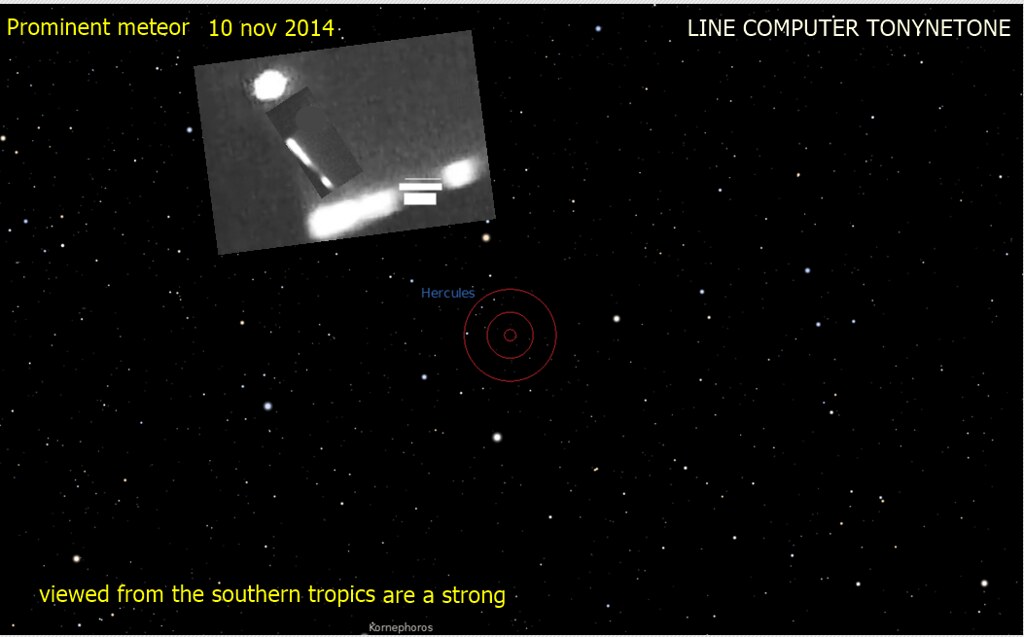
The radiant lies in the modern constellation Boötes, near the boundary with Draco and Hercules. It rises late, around midnight at mid-northern latitudes, and the optimal observing window is the three to four hours before dawn.
The shower's defining feature is the sharpness of its peak. Most major showers maintain near-peak rates for twelve to twenty-four hours either side of maximum. The Quadrantids hold peak rates for roughly six hours.
An observer who misses the peak by twelve hours sees a tenth of the predicted activity. An observer who hits it within an hour can see one hundred and twenty meteors per hour.
Forecasting the peak is now done routinely by the IMO and updated each November for the following January. The 2026 peak was predicted for 14:20 UT on 3 January, which placed the optimal observation in pre-dawn hours of 4 January for observers in the eastern Mediterranean.
Kahn drove out to her observing site at 03:00, having checked the local forecast, the moon's phase (waxing crescent, set before midnight), and the IMO peak prediction one last time.
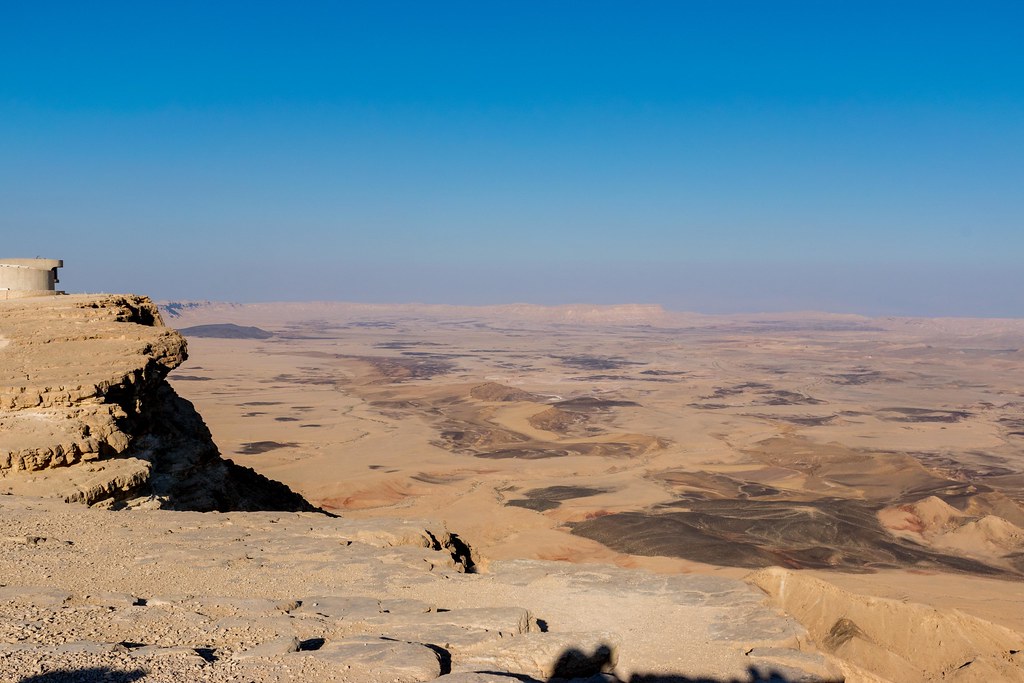
Her site, a flat limestone shelf above a wadi, is one she has used for fourteen years. The horizon is unobstructed in all directions, the elevation is roughly nine hundred metres, and the nearest artificial light is the small town of Mitzpe Ramon itself, two kilometres west and screened by a low ridge.
The Negev plateau is, in Kahn's professional judgement, one of the four or five darkest accessible sites in the Mediterranean basin. The Bortle classification ranges from 2 to a borderline 1 depending on the season and the humidity.
January is, paradoxically, the best month for desert observation. The summer atmospheric haze that bedevils Perseid observers in Mitzpe Ramon is absent, the seeing is steady, and the long nights allow extended sessions.
The cost is the cold. The Negev in January regularly drops below freezing, and the winds off the Sinai can produce wind chills approaching minus ten. Kahn's standard kit includes a down sleeping bag rated to minus ten, a wool balaclava, and two pairs of mittens.
She carries a small thermos of mint tea and an electric hand warmer that runs for six hours on a charge. The tea, she notes, is more important than the hand warmer.
Kahn's count for 4 January 2026 broke into two phases. The first hour, from 04:10 to 05:10, produced thirty-eight Quadrantids. The second hour, from 05:10 to 06:10, produced fifty-three, as the radiant climbed and the rate approached its theoretical peak.
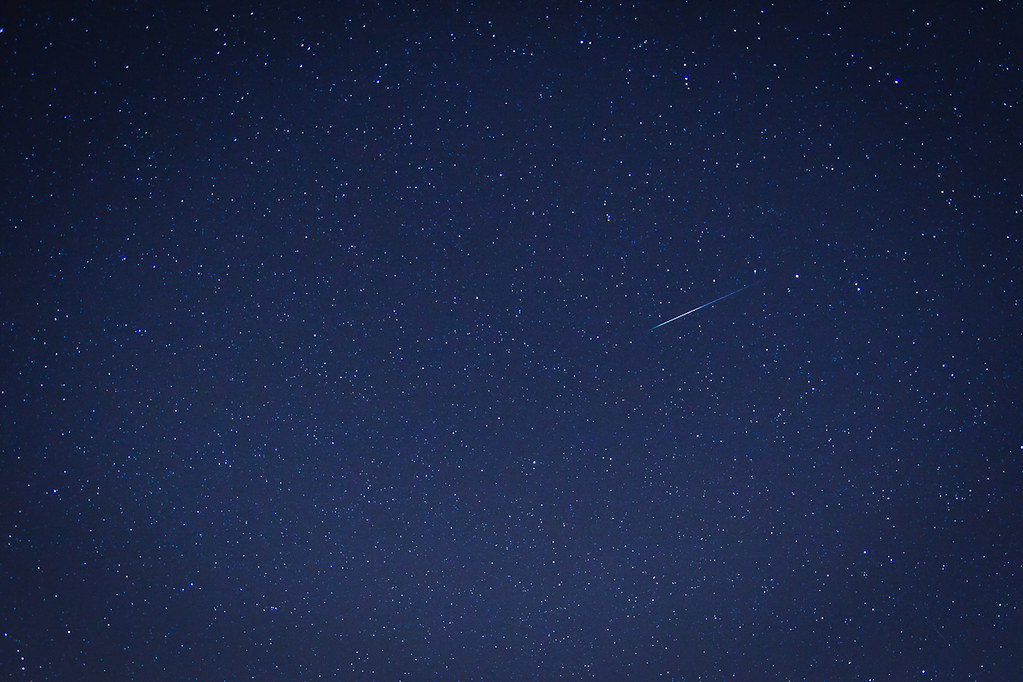
Several of the brightest Quadrantids appeared in the final twenty minutes before astronomical twilight began at 06:08. The brightest, at 05:54, was a magnitude minus three event in the western sky, with a short persistent train of perhaps one second.
Kahn's notebook entry for the moment reads, in Hebrew. Bright Quadrantid west, short train, possibly fragmented. Coffee gone cold.
The Quadrantids' parent body is the asteroid 2003 EH1, discovered in 2003 and thought to be the dormant remnant of comet C/1490 Y1, recorded by Chinese, Japanese, and Korean astronomers in the winter of 1490-1491.
The shower is, in this sense, six centuries old in the human record, and the meteors Kahn counted on 4 January are dust from a body that was last seen breaking up before the printing press reached most of Europe.
The shower's brevity is its discipline. An observer who arrives an hour late misses most of what the night will give. An observer who arrives an hour early sees almost nothing of value.
Kahn's quiet recommendation, for the home observer contemplating a first Quadrantid attempt, is to treat the shower as an appointment. The Quadrantids do not wait, the cold does not relent, and the small reward — ninety meteors in two hours, on a still desert morning — is exactly proportional to the precision of the preparation.