The Celestron CG-5 arrived in a long flat box on a Tuesday afternoon in October 2025. It weighed thirteen kilograms before the counterweight, and Cosmo Tate, who had ordered it after eight years of using nothing but a Dobsonian and a pair of binoculars, carried it up the stairs of his apartment on Hampshire Street in Cambridge with the kind of slow respect one accords to a thing that might be heavier than it looks.
The mount was not new. It was a 2014 example with one previous owner, an MIT graduate student who had used it for a year, decided that astronomy required more clear nights than Massachusetts offered, and sold it for two hundred and seventy-five dollars. Tate paid the asking price.
What followed was the slowest learning curve of his amateur astronomy life.
An equatorial mount is, in principle, a simple thing. It is a mount whose primary axis points at the celestial pole, with the result that a single slow rotation of that axis cancels the rotation of the Earth and keeps an astronomical target stationary in the eyepiece. The German equatorial variant, of which the CG-5 is an example, places a counterweight on a shaft extending from the polar axis opposite the telescope, so that the assembly balances.
In practice, the mount requires that the observer level the tripod, set the latitude on the polar axis to the latitude of the observing site, point the polar axis at the celestial pole, balance the telescope and counterweight on both axes, and engage a clock drive to track the sky. None of these steps is difficult. All of them, the first few times, take longer than expected.
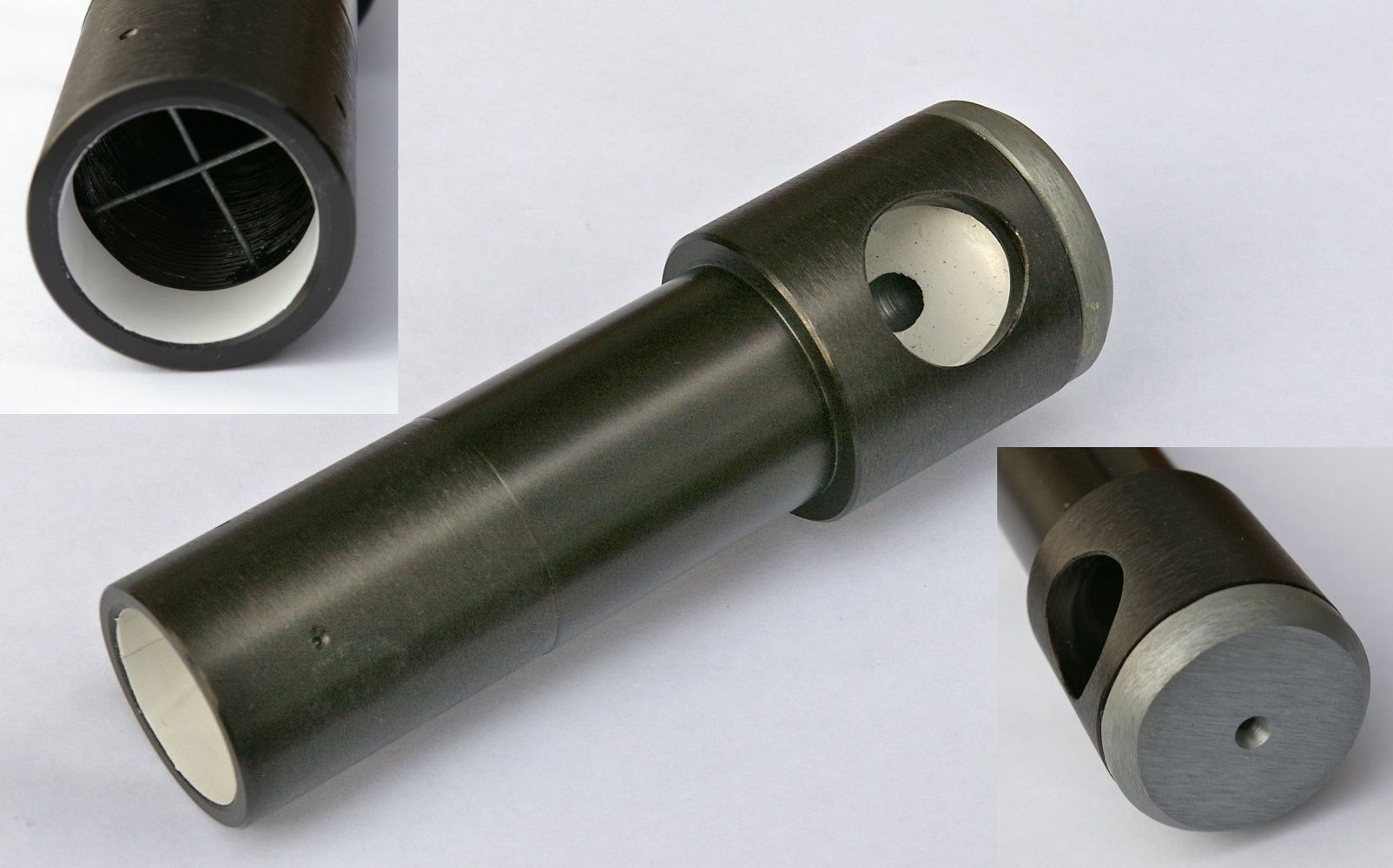
Tate set up the CG-5 in the small gravel driveway behind his building on the first clear October night. The latitude scale he set to forty-two degrees and a half. The leveling, on uneven gravel, took twelve minutes. The polar alignment, using the polar scope provided with the mount, took twenty-three minutes the first time and twelve the second. The balancing, with a 4-inch refractor on top, took six minutes.
By the time the mount was ready to track, Saturn had moved fifteen degrees toward the trees at the back of the yard.
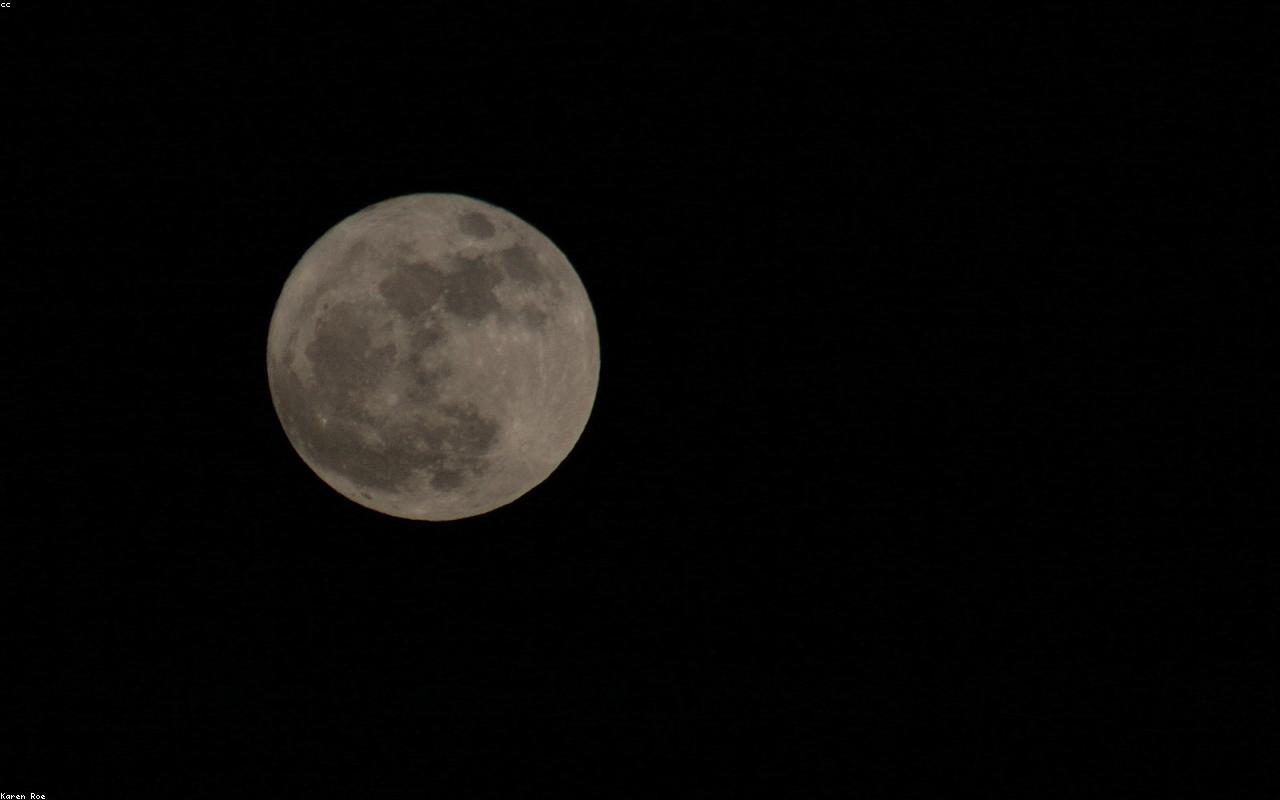
He persisted because he wanted to photograph the moon and the brighter planets, and because he had read enough about tracking mounts to know that the alt-azimuth Dobsonian he had been using for visual observation would not serve for photography of more than a few seconds.
The equatorial mount's first revelation, for Tate, was not photographic. It was visual. Once polar-aligned and clock-driven, the mount held Saturn in the centre of the field for as long as he wanted to look. The shift in the observing experience was substantial. With the Dobsonian, Saturn drifted across the field every thirty seconds at 150x and required a small nudge to recentre. With the CG-5, Saturn stayed where Tate put it. He could lean back, blink, breathe out, and the planet remained.
This freedom changes what an observer notices. The longer a target stays in the field without intervention, the more an observer's eye adapts to the small structure of the target, the dark belts of Jupiter, the cusps of Venus, the granulation of the moon along the terminator. Tate, who had previously thought of equatorial mounts as a photographic tool, came to think of the CG-5 as a visual instrument first.
The photographic capability came more slowly. Polar alignment good enough for visual use is not good enough for exposures of more than ten or fifteen seconds at long focal lengths. Tate spent two months working through the technique of drift alignment, in which the observer makes long visual sweeps of a star near the meridian and another near the eastern horizon, and adjusts the polar axis until those stars no longer drift north or south in the eyepiece.
The first photograph he was pleased with was a thirty-second exposure of the Pleiades, taken in late December 2025 with a Canon 6D and the 4-inch refractor at f/7. The stars were round. The faint nebulosity around Merope was visible. The image was not technically distinguished, but it was his.
The mount has weaknesses. The supplied hand controller is, in 2026, embarrassingly dated, with a two-line display and a button layout that requires the user to learn a small private language of menu codes. The drive gears, especially on the Right Ascension axis, have a periodic error that produces small visible oscillations in long exposures. The polar scope is functional but cramped, and Tate found that aligning it accurately required removing his glasses, which he is otherwise reluctant to do.
These are the standard complaints about consumer German equatorial mounts at this price. They are not specific to the CG-5. The Sky-Watcher HEQ5 Pro, the iOptron CEM26, the Celestron AVX, and the Orion Sirius EQ-G all share variations of the same complaints. The mounts that solve them, the Astro-Physics Mach2GTO, the 10Micron GM1000, the Software Bisque MyT, run between five and fifteen thousand dollars and are not consumer products.
For the observer choosing a first equatorial mount in 2026, Tate's recommendation is the Sky-Watcher HEQ5 Pro, at approximately fifteen hundred dollars new, with a payload capacity of eleven kilograms and a build quality slightly above the CG-5. For an observer on a smaller budget, the used CG-5 market remains active, with prices between two hundred and four hundred dollars for examples in good condition.
The learning curve, however, is not negotiable. Tate's notebook from October 2025 to March 2026 records, in addition to seventy-eight observing sessions, a long list of small mistakes: a counterweight shaft installed upside down, a polar alignment performed on the wrong star, a tripod leg that gradually loosened across a December session and threw the alignment off. Each mistake, in retrospect, was educational.
There is a question, in the home-observer community, about whether the equatorial mount is the right first mount for an observer who has graduated from a Dobsonian. The argument against is that the GoTo alt-azimuth mounts that have become common in the last decade, particularly the Celestron NexStar series and the Sky-Watcher AZ-GTi, offer comparable visual performance with simpler setup.
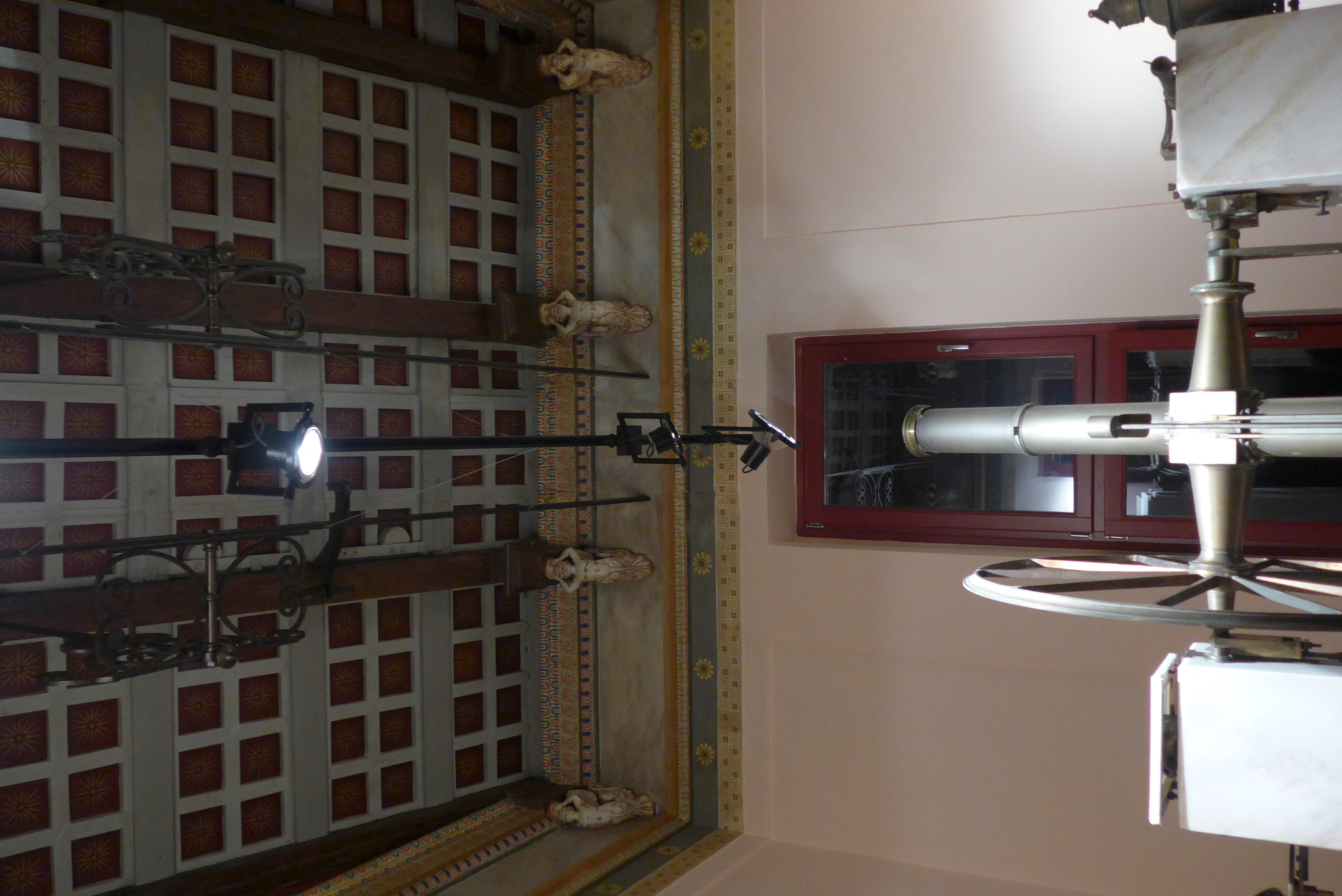
The argument for the equatorial, which Tate finds himself making more often now than he expected to, is that the equatorial teaches the observer the geometry of the sky in a way that alt-azimuth mounts do not. Aligning the polar axis with the pole, tracking the sky on a single rotation, watching an object stay still in the field while the world turns underneath you, these are old observing experiences. They have a history that goes back to medieval Persian astronomers and to the Greenwich transit instruments of the eighteenth century.
The CG-5 lives on a small piece of indoor-outdoor carpet at the corner of the driveway, under a fitted nylon cover that Tate's sister sewed for him in November. The counterweight sits inside on a shelf next to a row of eyepiece cases. The hand controller, with its dated two-line display, is in a drawer in the kitchen, where it is unlikely to be borrowed for any other use.
Tate is now considering, slowly and with some reluctance, an autoguider.