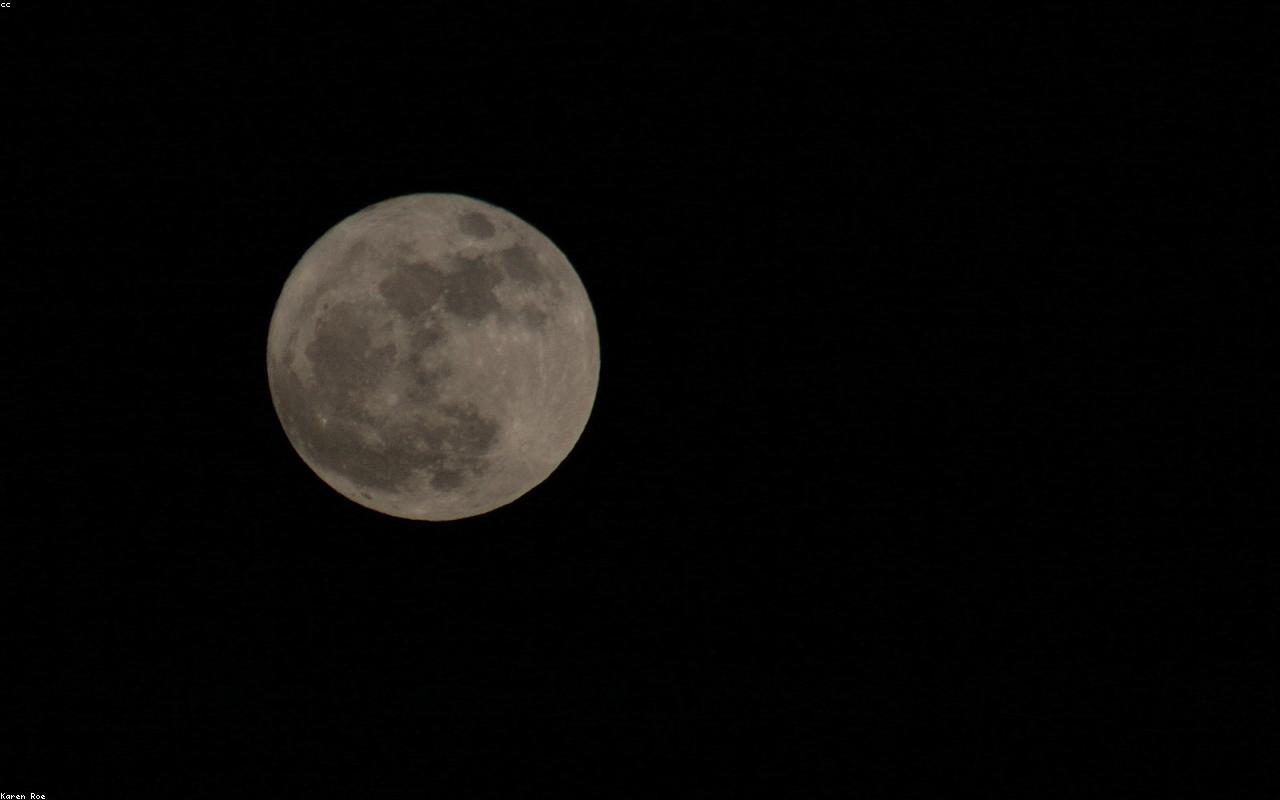
The ZWO ASI533MC Pro arrived in Cambridge in November 2025 in a small white box that weighed less than a paperback novel. Cosmo Tate, who had spent the previous year photographing the moon and the brighter planets with a DSLR through his 4-inch refractor, opened the box on his kitchen table, examined the small black cylinder with its 12-volt power port and its USB-3 socket, and felt a particular kind of dread he had not felt since his graduate qualifying exams.
The dread was specific. The DSLR he had been using was a tool whose limits he understood. The cooled CMOS camera in front of him was a tool whose limits he had read about extensively and whose capabilities he was, in practice, entirely unqualified to exploit.
Six months later, in May 2026, Tate has produced approximately forty stacked deep-sky images with the ASI533MC Pro that are, by his own assessment, modestly competent. He has also developed strong opinions about what the dedicated astrocamera does and does not offer the beginning imager.
The dedicated astrocamera differs from a DSLR or mirrorless camera in three important ways. First, the sensor is cooled by a thermoelectric Peltier element to between minus ten and minus thirty degrees Celsius below ambient, which reduces the thermal noise that accumulates during long exposures. Second, the sensor has no anti-aliasing filter and no infrared cut filter, which improves sensitivity at the red wavelengths important to many emission nebulae. Third, the camera has no shutter, no mirror, and no live image preview on the body itself; it is operated entirely through software on a connected computer.
The ASI533MC Pro, at a 2026 street price of approximately seven hundred dollars, sits at the lower end of the dedicated astrocamera market. The sensor is a 9-megapixel Sony IMX533, square in format, with 3.76-micron pixels. The cooling system reduces sensor temperature by roughly thirty-five degrees Celsius. The camera produces 14-bit raw images at full resolution.
On paper, these specifications compare favourably with a modern crop-sensor DSLR. In practice, the comparison is more complicated.
The DSLR, for the casual astrophotographer, has the advantage of a body that can be removed from the telescope and used for daylight photography, an integrated battery and memory card, an electronic viewfinder, and a familiar exposure-and-review workflow. The dedicated astrocamera offers none of these. It is a sensor at the end of a USB cable, and it lives in a particular ecosystem of capture software, processing software, and ancillary hardware that the new imager must learn.
Tate's first night with the ASI533 was a disaster of small mistakes. He could not get the camera to communicate with his laptop. When he did, the capture software, ASIAir, produced images that were uniformly black because he had set the gain too low. When he raised the gain, the images were grainy. When he extended the exposure to compensate, the stars trailed because his polar alignment was insufficient. When he improved his polar alignment, the camera lost connection to the laptop because his USB cable was the wrong specification.
By the second clear night, he had solved the connection problem. By the fourth, he was producing flat-frame and dark-frame calibration images. By the seventh, he was producing stacked images of the Orion Nebula that were technically dim but not embarrassing.
By March 2026, he had produced an image of the Rosette Nebula consisting of fifty 120-second exposures stacked in PixInsight, with calibration frames, that he was willing to print and hang on his office wall.
The improvement was not in the camera. The camera, on the first night and on the seventieth, produced essentially identical raw frames given identical settings. The improvement was in everything around the camera: the polar alignment, the focus, the autoguiding, the calibration, the stacking, the post-processing.
This is the truth about dedicated astrocameras that the manufacturers' marketing tends to obscure. The camera is not the bottleneck. The system around the camera is the bottleneck. An imager with a five-hundred-dollar camera, a well-aligned mount, and a thoughtful processing workflow will produce better images than an imager with a five-thousand-dollar camera, a casually aligned mount, and uncertain processing.
The cooling is the feature that most clearly justifies the spend on a dedicated astrocamera over a DSLR. On a summer night in Cambridge in 2026, with ambient temperature at twenty-two degrees Celsius, the ASI533 cooled to minus ten produces dark frames with noise that is roughly a quarter of what an uncooled sensor at the same temperature would produce. Over a three-hour integration, this reduction is meaningful. On long exposures of faint targets, it is the difference between a usable image and a noisy one.
The absence of an infrared cut filter is the feature that most affects the visual appearance of the resulting images. Emission nebulae rich in hydrogen-alpha emission, including the Rosette, the North America Nebula, and the Heart and Soul complex, appear noticeably redder and brighter with the dedicated camera than with a stock DSLR. An imager interested primarily in these targets will see a significant improvement.
The absence of an anti-aliasing filter improves sharpness slightly. The square format eliminates the need to compose around a rectangular aspect ratio, which is, in Tate's experience, more convenient than expected for deep-sky targets.
The weaknesses of the ASI533, specifically, include a relatively small sensor that limits the field of view at long focal lengths, a 9-megapixel resolution that is modest compared with newer cameras, and a software ecosystem that is functional but requires a Windows or Mac laptop on site.
The weaknesses of the dedicated astrocamera generally include the loss of portability, the need for power, the learning curve of the capture software, and the post-processing requirement. The dedicated astrocamera is not a casual instrument. It will not produce a usable image of the night sky in the same way a DSLR will, with one button press, at a star party.
For the observer considering a first dedicated astrocamera in 2026, Tate's recommendation is the ZWO ASI533MC Pro or its near equivalent from a competing manufacturer, at a price of approximately seven hundred dollars, paired with a stable mount of fifteen hundred dollars or more, an off-axis guider or guidescope, and a willingness to spend the first three months learning the system.
An observer not willing to spend three months learning will be happier with a DSLR or a stock mirrorless camera adapted to the telescope. The DSLR will produce competent images of the moon, the brighter planets, the Pleiades, and the Andromeda Galaxy with relatively little effort.
Tate's printed Rosette Nebula hangs in his office in the Yard, above a small desk with a 1965 Tasco refractor on it that his father used as a boy. The Tasco does not work; the objective lens is delaminated and the focuser is seized. The Rosette image is what he has, in 2026, that the Tasco was the start of in 1965, and he is aware enough of the line to find it pleasant rather than burdensome.