The phrase is unfair. Chromatic aberration sounds like a disease and is described, in most beginners' guides to telescopes, as a defect. Anselm Bauer would like to suggest, gently, that it is in fact the visible signature of the physics of refraction, that it is more interesting than it is harmful, and that the inexpensive achromatic refractor, which produces it conspicuously, remains one of the more pleasant instruments to own.
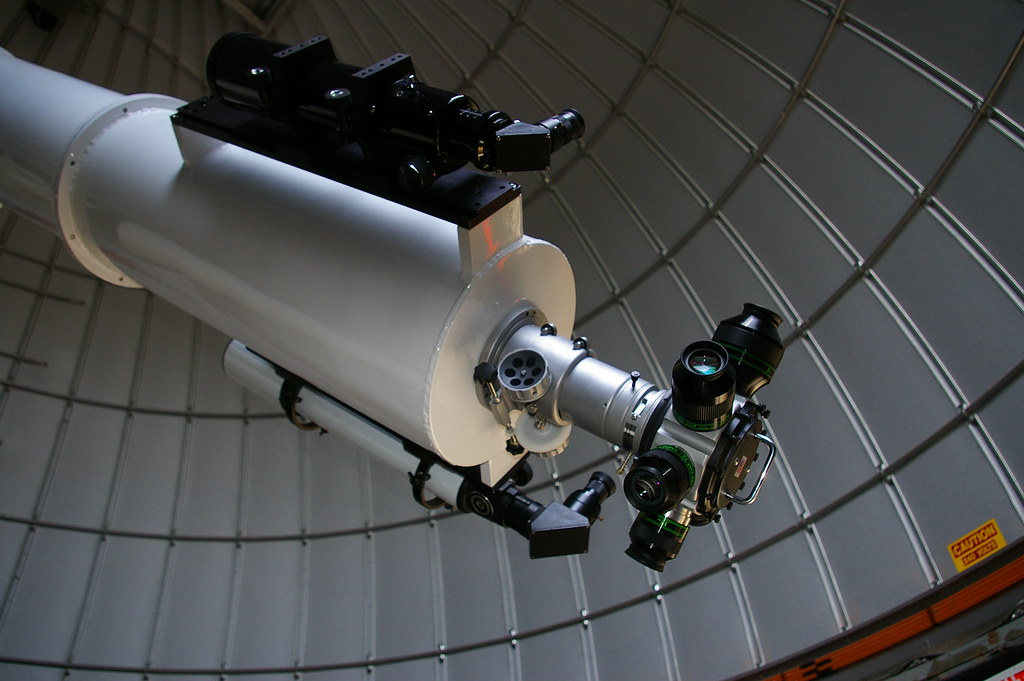
On a clear April evening in 2026, in his back garden in Munich, Bauer set up two refractors on a single mount. One was a 102-millimetre f/9.8 Sky-Watcher Evostar achromat, purchased used in 2008 for two hundred euros. The other was a 102-millimetre f/7 William Optics ZenithStar apochromat, purchased new in 2019 for fourteen hundred. He pointed both at Vega, just rising over a tiled rooftop, and asked his son, who is eleven and a fair witness, to describe what he saw.
The boy said the apochromat showed a clean white point with a small diffraction pattern. The achromat showed a clean white point with a small diffraction pattern and, around the star, a faint pale-violet halo about three Vega-diameters across.
That violet halo is chromatic aberration. It is the residual of an optical fact that has been known since Isaac Newton's 1672 paper to the Royal Society. When white light passes through a single glass lens, the lens bends short-wavelength blue light more sharply than long-wavelength red. The result is that different colours focus at slightly different distances behind the lens. A single-lens telescope produces colour-fringed images and no one has ever built one for serious use.
The achromatic doublet, invented around 1730 by Chester Moore Hall and patented in 1758 by John Dollond, uses two lenses of different glass types, typically crown and flint, to bring two wavelengths, usually red and blue, to a common focus. The third wavelength, the deep violet at around 430 nanometres, remains slightly out of focus. This residual is what produces the halo around Vega.
The apochromat does better. It uses three lens elements, or two elements with one made of extra-low-dispersion glass such as FPL-53 fluorite, to bring three wavelengths into focus. The remaining error, mostly in the deep blue and the deep red, is too small to see except on the brightest stars.
The trade-off, as Bauer's son could not be expected to know, is price. An apochromat costs between three and ten times what an achromat of the same aperture costs. The reason is the cost of low-dispersion glass and the cost of the additional grinding and figuring required for a three-element design.
For most observers in 2026, the question is whether the visible chromatic aberration in an achromat actually reduces the observing experience. Bauer's view, which he holds firmly enough to defend in print, is that on most targets, for most observers, it does not.
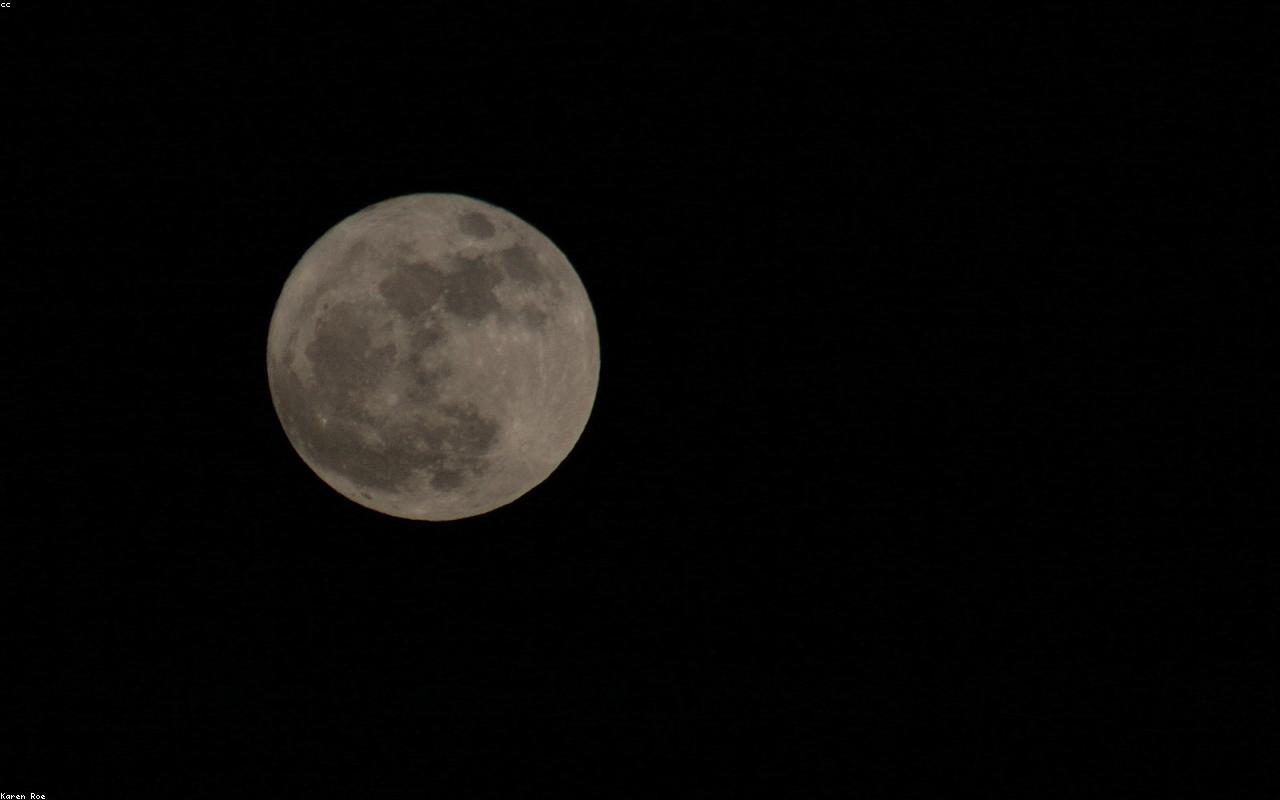
On the moon, the achromat shows mountain shadows, crater walls, the dome of Plato, the rilles of the Hadley Apennines, and the bright ejecta rays of Tycho. The chromatic aberration manifests as a faint violet edging on the limb of the moon when it is brilliantly lit. Most observers stop noticing this within the first ten minutes of any session.
On Saturn, the achromat shows the rings, the Cassini Division on steady nights, the equatorial cloud bands, and the major moons. The chromatic aberration manifests as a faint violet halo around the bright planet, which is again visible mostly when one is looking for it.
On deep-sky objects, the chromatic aberration is largely invisible. Galaxies, nebulae, and star clusters are too faint to produce the violet halo. The Andromeda Galaxy, in a four-inch achromat from a dark site, looks essentially identical to what it looks like in a four-inch apochromat.
Where the achromat genuinely struggles is on bright doubles, on Venus when it is high and brilliant, and on the brightest stars under high magnification. Sirius in a fast achromat is a violet mess. This is a real limitation, and an observer whose primary interest is double stars or planetary detail at high power should consider the apochromat.
Most amateurs, in practice, are not such observers. They look at the moon, at the brighter planets, at the Messier catalogue, and at the rich star fields of the summer Milky Way. For these targets, the achromat at a fifth the price is, to a first approximation, as good.
There is also a small aesthetic argument for the achromat, which Bauer would not press in a technical review but is willing to make in a longer essay. The faint violet halo around a brilliant star is, in fact, beautiful. It is the only visible reminder, at the eyepiece, of the physics of glass. The apochromat hides this physics; the achromat shows it.
Bauer's 102-millimetre Sky-Watcher has been in continuous use for eighteen years. It has been carried to dark sites in Bavaria, to the Italian Alps, to a small island off the coast of Croatia. It has survived three drops, two long car journeys, and one Bavarian winter spent in an unheated garage. The objective lens still produces tight stars and the focus mechanism still works.
The William Optics apochromat, by contrast, has been used perhaps eighty times in seven years. It is the better instrument by any quantitative measure. It is also, Bauer admits, the instrument he is more nervous about taking out of the house.
The recommendation, for an observer choosing a first refractor in 2026, is the f/10 or longer achromat in apertures from 80 to 120 millimetres, mounted on a stable alt-azimuth mount. A Sky-Watcher Startravel or Evostar, an Astro-Tech AT102, or a used Vixen A80M from the early 2000s will all serve. The cost will run between three hundred and five hundred euros new.
For the observer who has the budget and the inclination, an apochromat will reward the spend with cleaner images at high power and more comfortable observation of bright doubles and planetary detail. The William Optics ZenithStar 81, the Tele Vue 76, the Sky-Watcher Esprit 80, and the Takahashi FC-76 are all instruments that will outlive their owners with reasonable care.
The blue halo is not a defect. It is a feature of how light works when it passes through glass. The achromatic refractor is not a compromise; it is a different instrument, with a long history and a particular pleasure, and it is still, in 2026, an honest choice for a thoughtful observer with a modest budget.