There is a network of six small observatories that, taken together, has watched the Sun without interruption since 1995. Big Bear in California, Mauna Loa in Hawaii, Learmonth in Western Australia, Udaipur in Rajasthan, El Teide on Tenerife, and Cerro Tololo in Chile. Each site is positioned so that the Sun is above the horizon of at least one of them at any given moment.
The network is called GONG, the Global Oscillation Network Group. It is operated by the National Solar Observatory in Boulder, Colorado, and its primary mission is helioseismology.
Cosmo Tate visited the GONG instrument at the Big Bear Solar Observatory in February 2026 at the invitation of the site engineer, Anita Whitfield. The instrument was, that morning, doing exactly what it does every morning. It was producing, every minute, a Dopplergram of the visible solar disc.
A Dopplergram is a map of the line-of-sight velocity of the solar surface. The Sun is in continuous oscillation, in millions of overlapping acoustic modes that propagate through its interior and surface. The amplitudes of these oscillations, when measured precisely, encode information about the solar interior that is otherwise inaccessible.
The Sun is, in this sense, a bell that has been struck and is still ringing. The GONG instruments listen to the ringing.
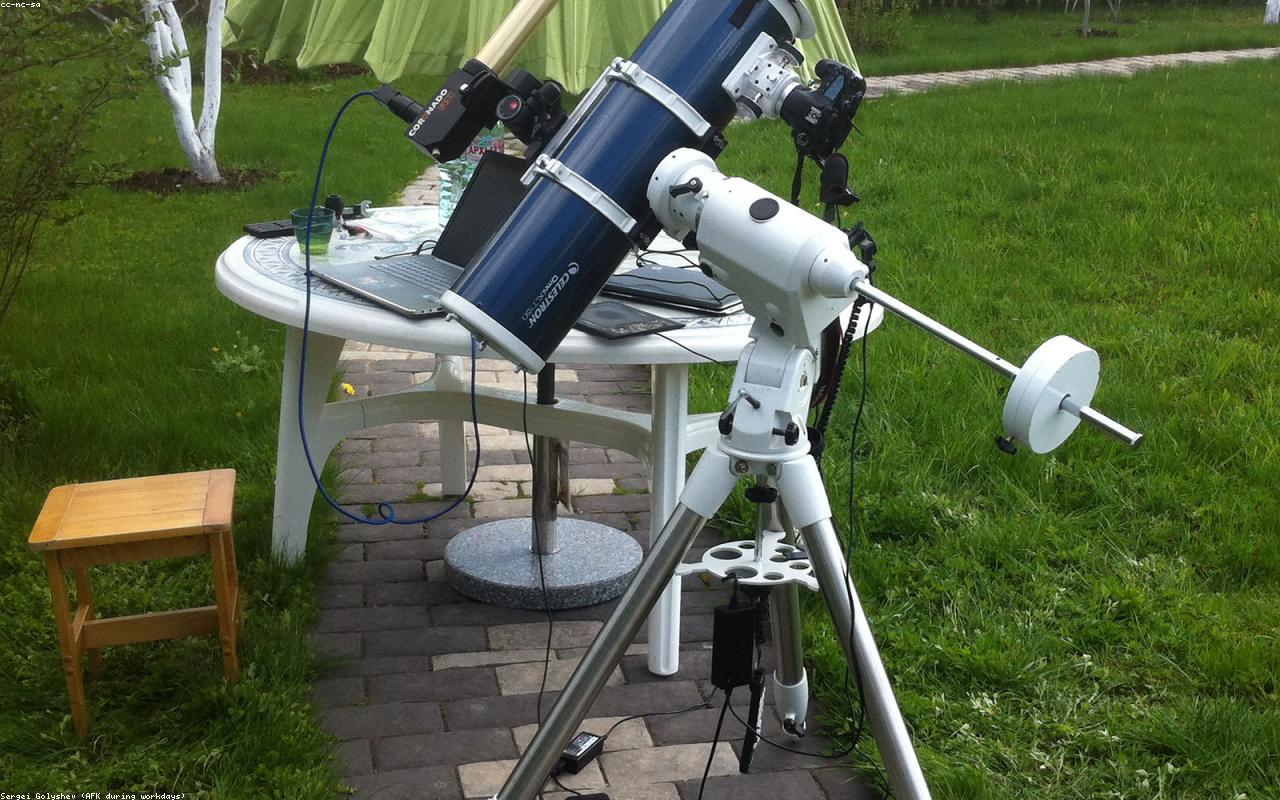
The instrument itself is unprepossessing. A small telescope with a polarizing modulator, a Michelson interferometer, and a 256-by-256 pixel camera, housed in a fibreglass dome about three metres across. The original 1995 hardware has been upgraded twice. The current generation of CCDs replaced the originals in 2010.
Whitfield showed Tate the morning's data stream. The instrument had captured 1,440 Dopplergrams in the previous twenty-four hours, one per minute, transmitted in near-real-time to the data centre in Tucson and combined with the parallel streams from the other five sites.
The combined dataset has a temporal resolution of one minute and a spatial resolution sufficient to resolve millions of independent oscillation modes simultaneously.
What this has enabled, over thirty years of operation, is a sustained look at the interior of the Sun. The depth of the convection zone has been measured. The differential rotation of the solar interior has been mapped from the surface down past sixty percent of the radius. The detection of large-scale subsurface flows that precede the emergence of active regions has been demonstrated and is now used operationally in space-weather forecasting.
None of this work is glamorous. The instruments do not produce striking photographs of the Sun. They produce numerical fields, which are then processed by teams of solar physicists into the inferences that constitute helioseismology.
Whitfield, asked what the most surprising result of the network has been, named the discovery that the Sun's polar regions rotate more slowly than expected at depth, a finding which complicates the dynamo models of solar magnetic field generation.
GONG has also, as a secondary product, become one of the world's most reliable sources of full-disc hydrogen-alpha imagery. Each station carries a hydrogen-alpha telescope alongside the Doppler instrument, and the resulting near-continuous record of chromospheric activity is used by space-weather forecasters at the NOAA Space Weather Prediction Center in Boulder.
When an amateur in 2026 checks the current state of the solar chromosphere from a website that updates every few minutes, the image is often from GONG. The provenance is not always clearly attributed, which the network engineers regard with the mild irritation of people whose work is being used.
The network's funding, Whitfield mentioned in passing, has been precarious for many of its thirty years. GONG is operated on a modest budget by professional astronomy standards, perhaps eight million dollars per year across all six sites, and has periodically faced budget reductions that would have shut down individual sites.
Each shutdown has been averted, sometimes narrowly, sometimes with the help of the international partner institutions that host the non-American sites.
Tate asked what would be lost if a single site were closed. Whitfield's answer was that the network would survive with five stations, with reduced temporal coverage, but that any further reduction would compromise the continuous-coverage property that is the network's basic value proposition.
The Sun does not stop oscillating during a data gap. The information lost during the gap is not recoverable.
GONG operates alongside the space-based Helioseismic and Magnetic Imager on the NASA Solar Dynamics Observatory, which has produced its own continuous Doppler dataset since 2010. The two are complementary, not redundant. The space instrument provides higher spatial resolution. The ground network provides the longer baseline and the reassurance of independent measurement.
When SDO experienced a propellant-related operational anomaly in late 2023, GONG provided the only continuous helioseismic dataset for the duration of the recovery.
Tate left Big Bear after a long lunch with Whitfield in the observatory's small kitchen. The instrument continued to produce its Dopplergram every minute. It had been doing so, with brief interruptions for maintenance, for thirty-one years.
The Sun rose and set over each of the six stations in the network. At any given moment, at least one of them was watching.
There is a particular discipline in this kind of long observation. It is not the romantic discipline of the lone amateur at the eyepiece, though Tate notes the underlying virtue is similar. It is the institutional discipline of keeping a complex instrument running, year after year, through equipment failures and staff turnover and funding crises.
The work is unglamorous and slow and absolutely indispensable. The Sun is a thirty-year baseline now, in this dataset, and growing.