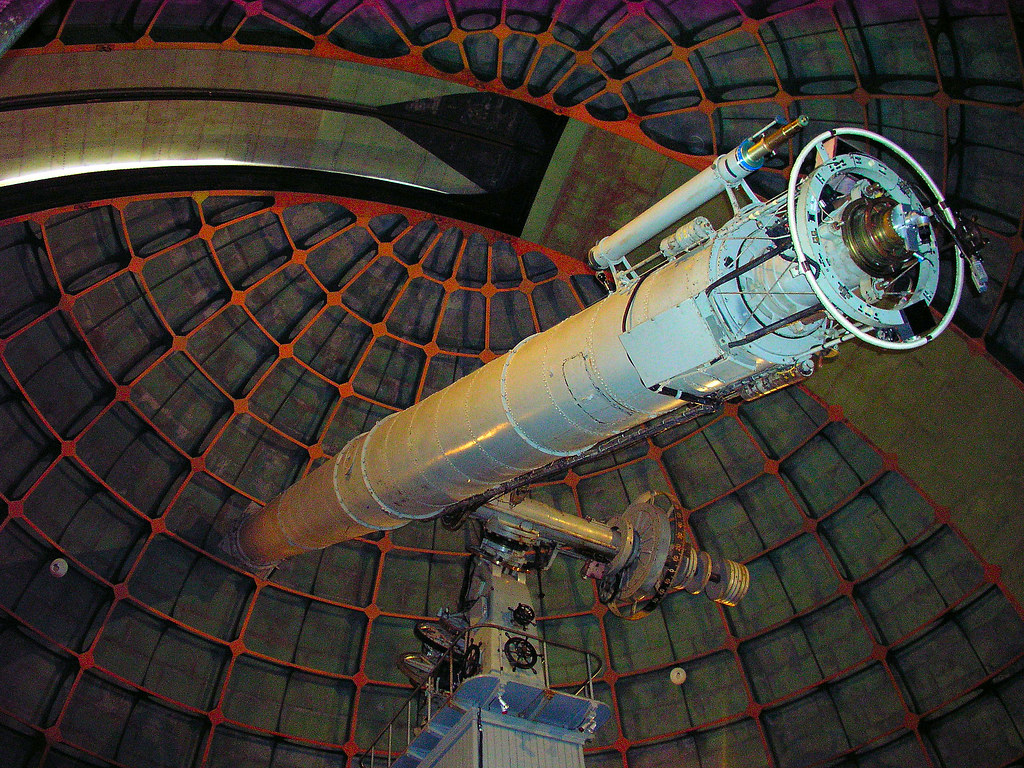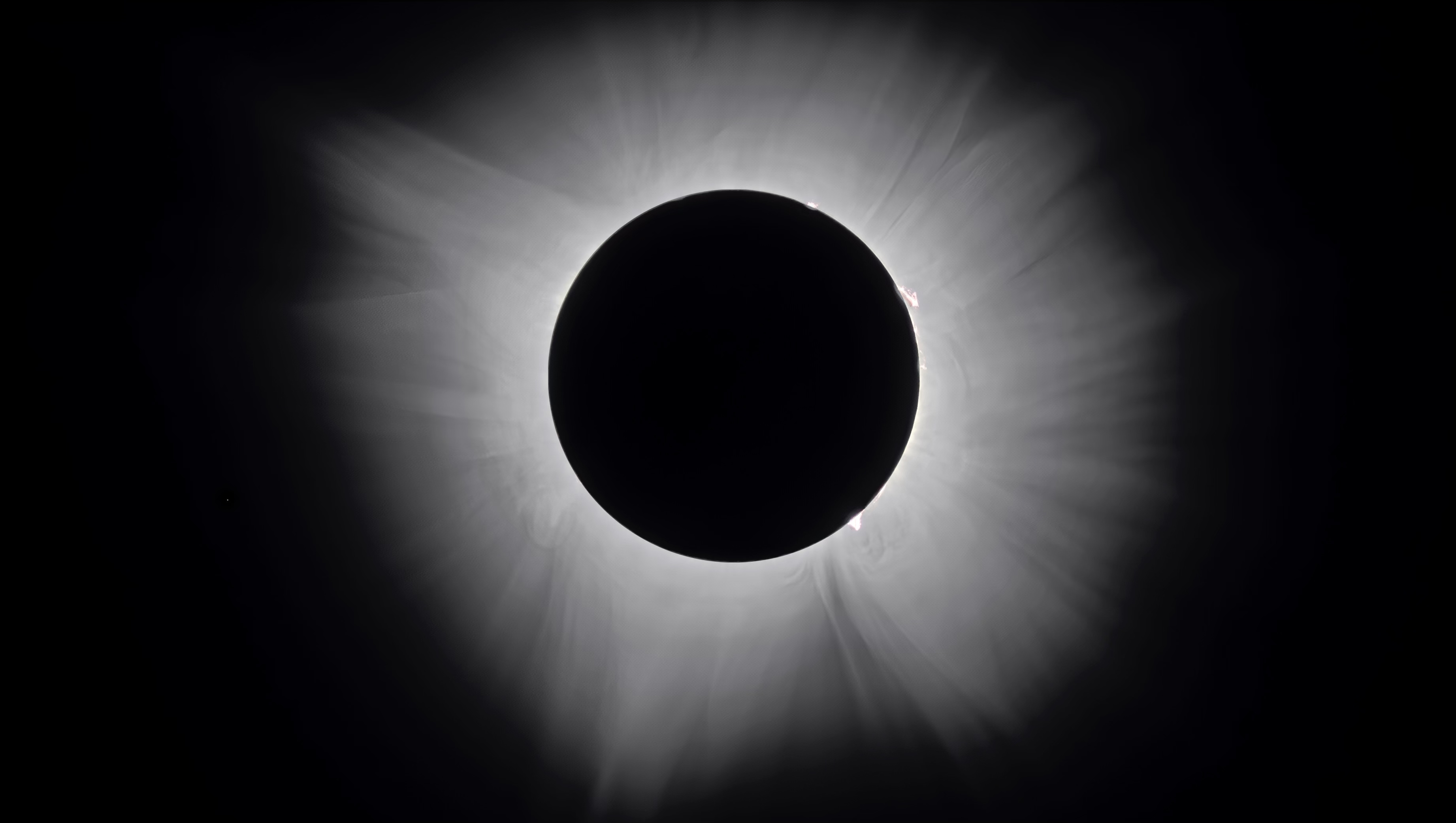
In 1930, the French astronomer Bernard Lyot demonstrated, at the Pic du Midi de Bigorre in the central Pyrenees, an instrument that produced an artificial total eclipse inside a telescope. He called it a coronagraph. It was the first instrument capable of observing the solar corona on a non-eclipse day, and it transformed the study of the Sun.
Lyot's design occluded the bright photosphere with an internal disc and used a series of carefully aligned stops to suppress the scattered light that would otherwise overwhelm the much fainter corona. The principle is simple. The execution required years of refinement.
Beatriz Garcia has been working on a long article about coronagraphs for two years. In May 2026 she travelled to the abandoned site of the High Altitude Observatory's first coronagraph station, at Climax, Colorado, elevation 3,440 metres, to look at what remains.
What remains is not much. The station operated from 1940 to 1952. It was built by the astronomer Walter Roberts, then twenty-six years old, with a Lyot-design coronagraph constructed in part from materials donated by the local Climax Molybdenum Mine. The mine provided the labour to clear the road in winter.
Roberts observed the corona from Climax through most of the Second World War, producing some of the first systematic non-eclipse coronal records.
The original instrument is no longer at the site. It was moved to the High Altitude Observatory's Boulder facility in the 1950s and is now preserved as an artefact, no longer operational. The Climax site itself was decommissioned and the small wooden building that housed the dome was demolished sometime in the 1970s. A concrete pad and a few collapsing posts remain.
Garcia walked the site for an afternoon. The view of the Sawatch Range to the south is one of the reasons the site was chosen. The reasons are still visible.
What the Climax coronagraph began, the modern instruments have continued. The Mauna Loa Solar Observatory in Hawaii, operated by HAO since 1965, runs a working coronagraph that observes the inner corona daily. The K-Cor instrument at Mauna Loa, installed in 2013, observes the K-corona, the white-light scattered component, every fifteen seconds during daylight hours.
K-Cor is, in a direct line of descent, Lyot's instrument refined across nine decades. The optical principle is the same. The materials and the mechanical tolerances are different by orders of magnitude.
Space-based coronagraphs have, since 1995, extended what ground-based instruments can do. The Large Angle and Spectrometric Coronagraph aboard the Solar and Heliospheric Observatory has produced an essentially continuous record of the outer corona for thirty years. The COR1 and COR2 instruments on the STEREO spacecraft added stereoscopic views from 2006 onward. The Metis instrument on the Solar Orbiter, launched in 2020, is producing the highest-resolution coronagraph data yet obtained.
All of them, in design lineage, are descendants of Lyot's 1930 instrument.
The amateur coronagraph is a different matter and largely does not exist. The instrument's demands are severe. A working coronagraph requires extraordinarily clean optics, an altitude site to minimize scattered atmospheric light, and a level of mechanical precision that is uncommon outside professional instrument shops.
There have been amateur attempts. Garcia spoke to one builder, a retired optical engineer named Phillip Munro of Flagstaff, Arizona, who spent eleven years constructing a small coronagraph in a backyard workshop. The instrument produced its first usable image of the inner corona in November 2024.
It is, Munro estimates, the only currently functional amateur-built coronagraph in North America, possibly in the world.
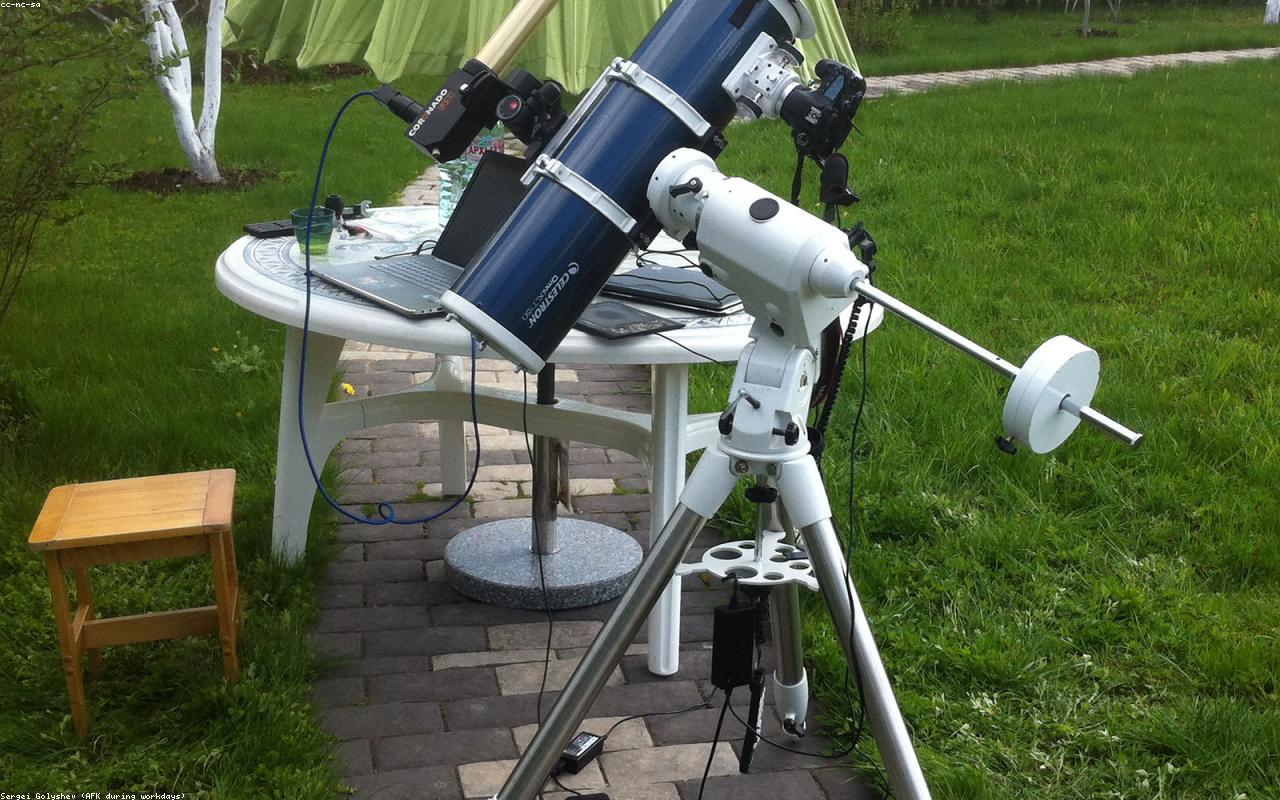
Munro's instrument operates on an 80mm refractor with a custom occulting disc and a specially fabricated Lyot stop. The optics were polished by a professional optician on contract. The total cost, Munro estimates, was approximately fourteen thousand dollars over the eleven years of construction.
The instrument does not produce images of the quality the Mauna Loa K-Cor produces. It produces images that demonstrate the corona is observable from a high desert site without an eclipse, which Munro considers sufficient justification for the project.
Garcia asked Munro why he undertook the work. His answer was the expected one. He had wondered, since he was twelve, whether it could be done by an amateur, and at some point in his sixties he stopped wondering and started building.
The Lyot coronagraph is one of the small number of professional instruments that have a recognizable amateur descendant tradition. The hydrogen-alpha filter is another. The Schmidt camera is a third. Most professional instruments are not amateur-buildable. These few are, with patience and skill at the limits of what an amateur can muster.
The reason matters. Lyot's design is not magic. It is a careful arrangement of optical elements in a particular geometry, and the geometry is fully published in the standard texts.
What it requires, beyond the geometry, is the discipline to build clean optics and to mount them with the tolerances the design demands. This is not a budgetary problem, primarily. It is a skill problem, and skill is acquired by people who decide to acquire it.
Garcia ended her afternoon at Climax sitting on the concrete pad of the original dome. The wind was sharp, even in late May, and the altitude made her conscious of her breathing. The Sun was high. She had no instrument.
She thought, with some embarrassment at the directness of the thought, of Walter Roberts at twenty-six, hauling lumber up the road from the mine in the winter of 1940, building his observatory on this exact piece of ground.
The instruments now in orbit, and the working coronagraph at Mauna Loa, and Munro's small refractor in Flagstaff, are all in some sense the children of that decision. The corona, once visible only in the brief seconds of totality, is now under continuous observation.
Lyot died in 1952, at the age of fifty-five, on the train from Cairo to Alexandria, after observing the total solar eclipse of 25 February of that year in Khartoum. His coronagraph outlived him by decades and has descendants still being built in 2026.
Climax, Colorado, has the wind and the view and the concrete pad. The rest is at Mauna Loa and at Boulder and aboard the Solar Orbiter and, modestly, on a workbench in Flagstaff.