On the evening of May 4, 2026, from a roof terrace in the Vomero district of Naples at roughly forty degrees, fifty minutes north latitude, the five naked-eye planets were not all simultaneously visible, but four of them were available across the night with patience.
This is the basic, useful question that the home observer asks more often than any other: what is up tonight, where, and at what time. The answer, on any given evening, depends on the date, the observer's latitude, and the local horizon.
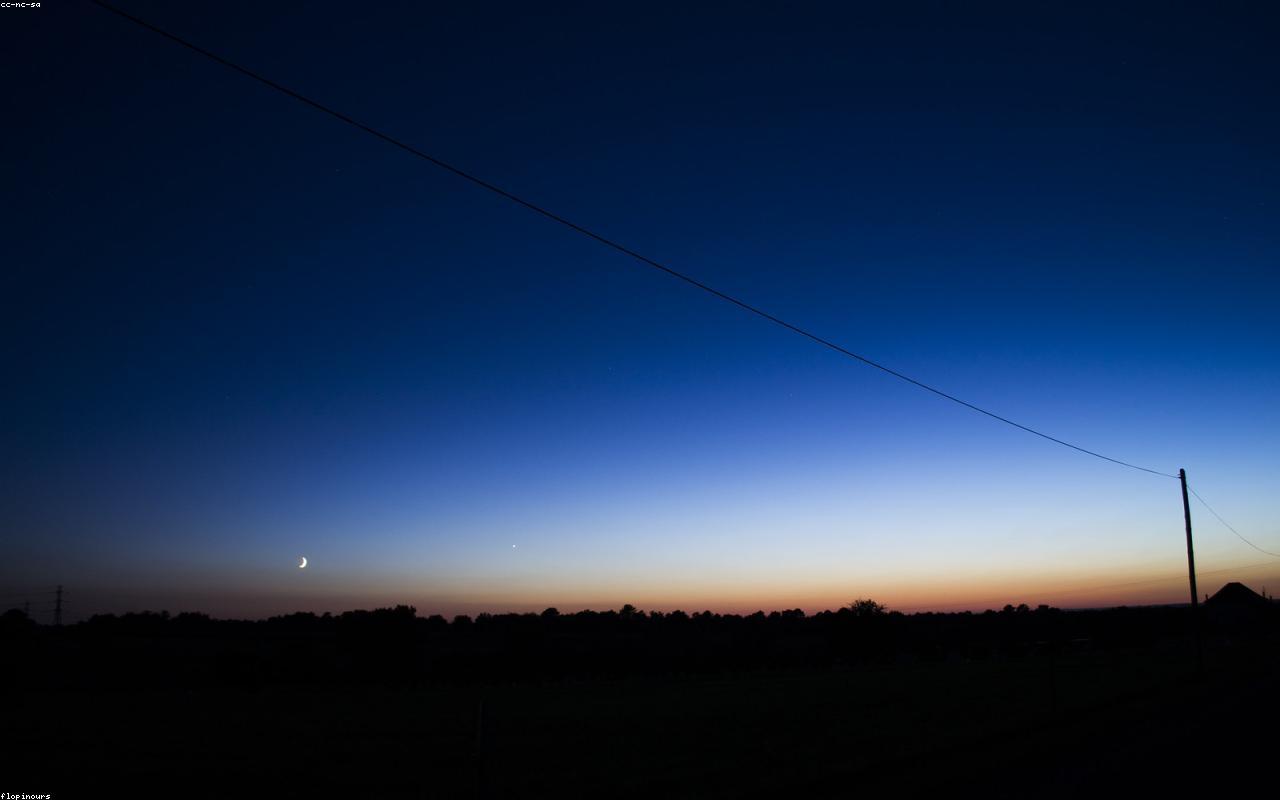
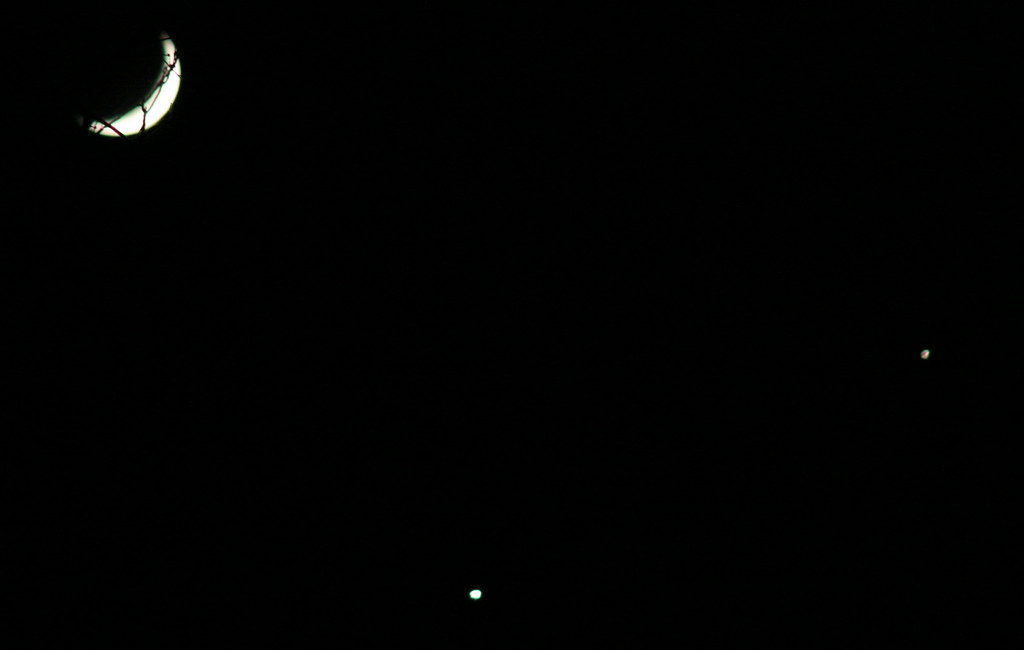
Venus, on this particular night, was the evening star. She was visible in the western sky after sunset, at a magnitude of negative 4.1, brighter than anything in the heavens other than the Moon. She set at 10:38 p.m. local time.
An observer who stepped onto a balcony at 9 p.m. and looked west would not need a star chart to find Venus. She is the only object that bright in that part of the sky. The phase, through a small telescope, was a thickening crescent.
Mars was an evening object in Leo, due south at about 10 p.m., at a much dimmer magnitude of 1.4. Mars in May 2026 is past opposition and moving away from Earth; the disc is small and the colour is the brick-red that distinguishes the planet from the cooler red of Antares and Betelgeuse.
Jupiter, in early May 2026, was in conjunction with the Sun and was effectively absent from the night sky for the month. The home observer looking for him would not find him; he reappears as a morning object in late June.
Saturn was a morning object, rising around 3:15 a.m. in the southeastern sky in Aquarius, at magnitude 0.9. An observer willing to set an alarm would see him low in the southeast about an hour before dawn.
Mercury was, for a brief window in mid-May, a difficult evening object low in the west just after sunset. The window for Mercury is always short and the planet is always low; from forty degrees north latitude in May, he was visible for perhaps twenty minutes at most.
The pattern of planetary visibility is governed by a small number of straightforward facts. The planets all move along the ecliptic, the apparent path of the Sun across the sky. They never stray far from it. They rise and set with the rotation of the Earth, but their positions along the ecliptic shift slowly over weeks and months as both they and Earth orbit the Sun.
Venus and Mercury, being inside Earth's orbit, are always near the Sun in the sky. They are either morning stars or evening stars, never visible at midnight. Mars, Jupiter, and Saturn, being outside Earth's orbit, can be visible at any hour of the night, depending on where they are in their orbits relative to Earth.
The mid-northern observer, by which is meant anyone between roughly thirty and fifty degrees north, sees the ecliptic at different angles depending on the season. In winter, the ecliptic in the evening sky stands high and steep; in summer, it lies flat along the southern horizon. This is why summer evening planets are often low and why winter evening planets ride high.
May, in this respect, is a transition month. The evening ecliptic is dropping. Venus, brilliant though she is, will sink lower in the western sky through June and disappear into the Sun's glare by July, after which she will reappear as a morning star in August.
Mars will fade through the summer and become difficult to find by October.
Jupiter, returning to the morning sky in late June, will become the dominant planet of the second half of the year. By October he will be an evening object again, and by December, near opposition, he will be visible all night.
Saturn, the slow walker, will be near opposition in mid-September 2026 and will dominate the late-summer and autumn evening sky.
For the home observer who simply wants to know what is up tonight, the simplest tool is a printed monthly chart from a reliable source. Sky and Telescope publishes one. Astronomy magazine publishes one. The free desktop program Stellarium, which runs on all common operating systems, will produce a chart for any date and location.
What a chart cannot supply is the small pleasure of recognition. The first time an observer steps outside and identifies a planet without a chart, by knowing where to look, is a moment that does not repeat. After it, the sky has become a slightly more knowable place.
Iolanda Ferro, who runs a small private observatory above Naples, says that her students invariably begin with the Moon and end with Saturn. The Moon teaches the geography of the sky. Venus teaches brightness. Mars teaches colour. Jupiter, through any telescope, teaches scale, and Saturn teaches awe.
She has, in twenty years of teaching, never had a student remain unmoved by Saturn through an eyepiece. The rings, even in a small instrument, are unambiguous.
For the May 2026 sky, then: Venus low in the west after sunset, Mars due south at 10 p.m., Saturn low in the southeast before dawn. Jupiter on holiday. Mercury, for the brief, for the patient.
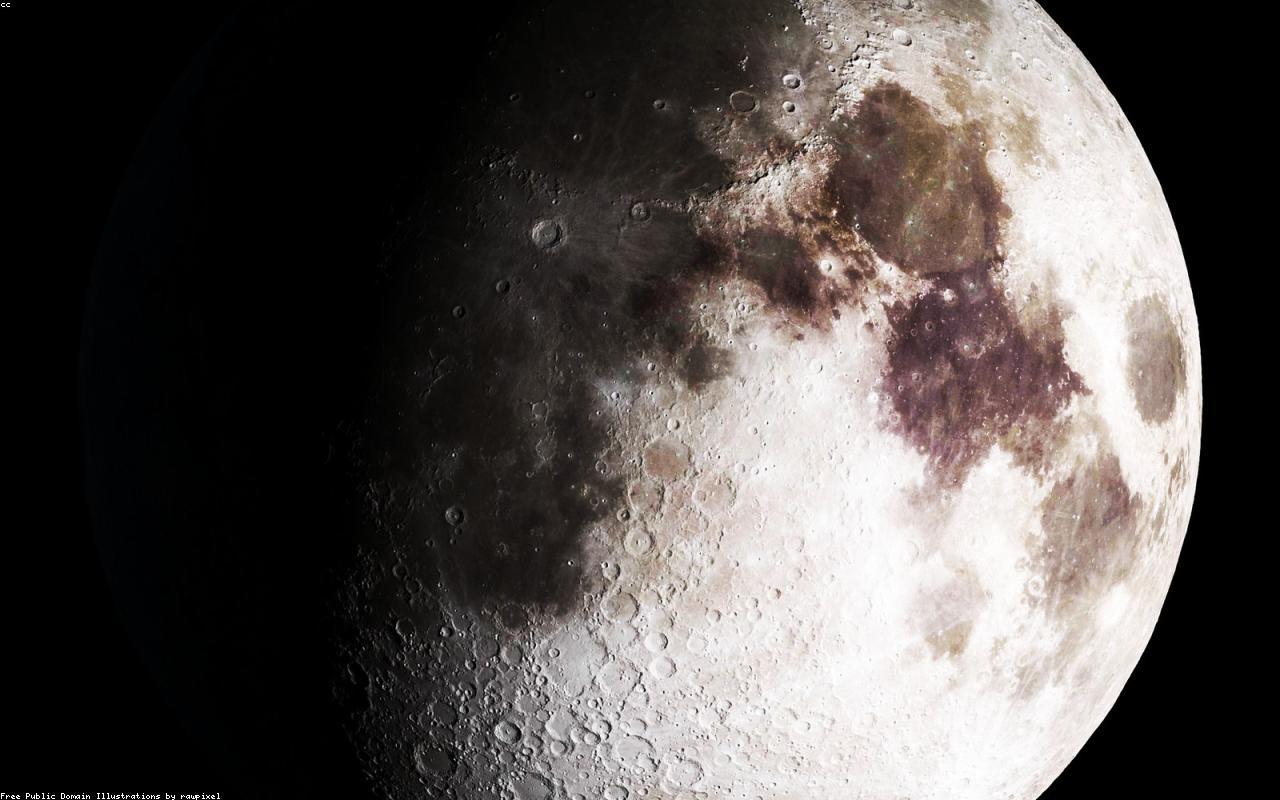
And the Moon, on this particular evening, just past first quarter, setting around 2 a.m., providing roughly three hours of moonless dark sky for anyone willing to stay up.
Filed under