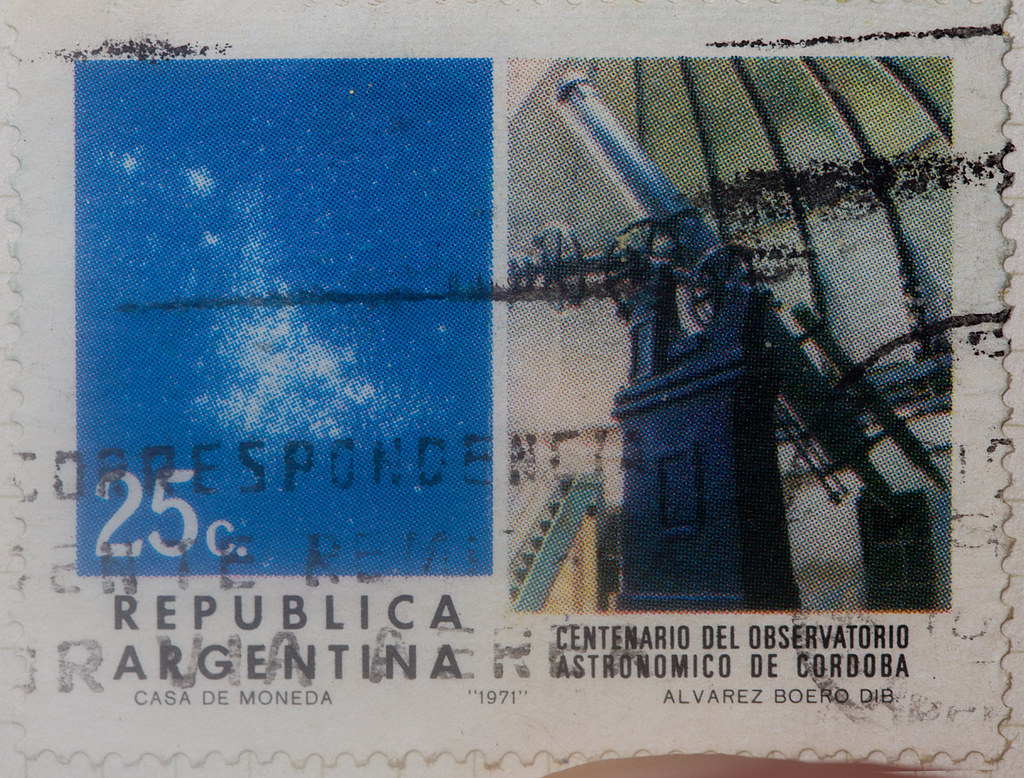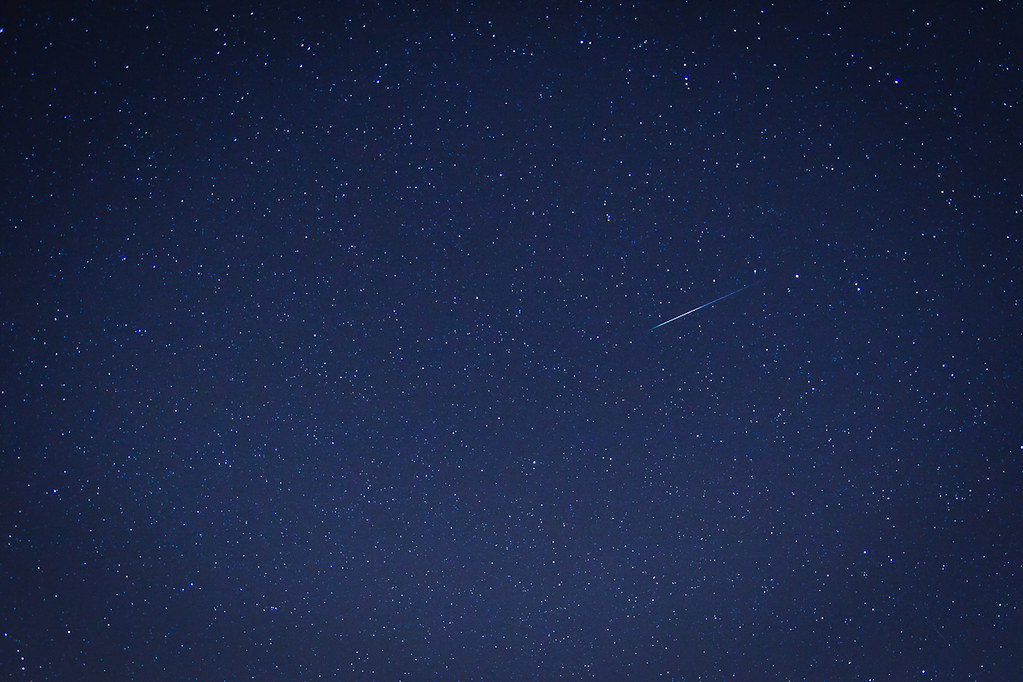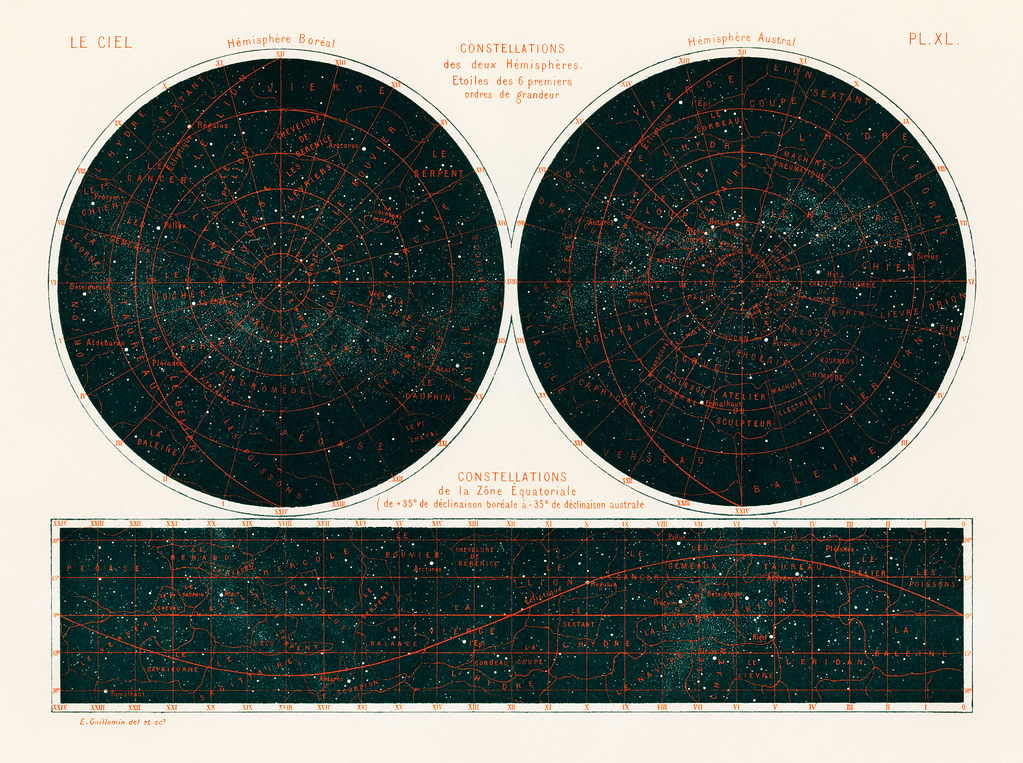
On the night of 8 October 2025, Beatriz Garcia stood in her courtyard in Córdoba, Argentina, and watched for Draconids. She counted four in two hours. She wrote in her notebook that this was the right number.
The Draconids are a minor northern shower that, in most years, produces zenithal hourly rates between five and ten. In rare years, when the Earth crosses a denser strand of comet 21P/Giacobini-Zinner's debris, the shower has produced storms — most notably in 1933 and 1946, with rates above five hundred per hour.
Garcia's interest is the ordinary year. The minor showers, she argues in her quarterly column for Last Light, deserve a place in the home observer's calendar precisely because they do not demand anything.
A major shower like the Geminids requires planning, preparation, and often travel. A minor shower asks only that the observer step outside for an hour at a known date, with no expectation of spectacle.
The list Garcia recommends to first-year minor-shower observers is short. The Quadrantids, in the first week of January. The Lyrids, around 22 April. The Eta Aquariids, in early May. The Delta Aquariids, in late July. The Draconids in October. The Ursids, just before Christmas.
Of these, the Lyrids and the Eta Aquariids are the most accessible to suburban observers. Both can produce twenty to thirty meteors per hour at peak under good conditions, and both have radiants that climb high enough in the small hours to support a comfortable session.
The Quadrantids are technically a major shower, with peak rates above one hundred, but they suffer from a short and sharp maximum, often only six hours wide. An observer who chooses the wrong night sees almost nothing.
The Ursids, in Garcia's affection, are the meteor shower of the lonely. The peak falls on or near 22 December, when most observers in the northern hemisphere are occupied with family obligations and the radiant in Ursa Minor is high overhead all night.
She has watched the Ursids alone from her courtyard for the last fourteen years, and she has never counted more than fifteen in a single session. The shower's parent comet, 8P/Tuttle, has a thirteen-year orbit and produces a thin, slow stream.
The Delta Aquariids, in late July, are the shower most accessible to southern-hemisphere observers, with a radiant that stands high in southern skies. Garcia recommends them as the southern observer's introduction to systematic meteor counting.
The Eta Aquariids share a parent with the Orionids — comet 1P/Halley, the most famous of the periodic comets. Both showers are debris from the same body, encountered on different sides of Halley's orbit, in May and in October respectively.
The continuity matters to the observer who watches both. A May Eta Aquariid and an October Orionid are, in a real sense, fragments of the same comet, separated by six months of Earth's progress around the sun.
Garcia recommends, for the first-year minor-shower observer, a small unlined notebook and a pencil. The act of writing — date, time, location, sky condition, count — converts a casual hour outside into a contribution to the historical record.
The historical record matters. The International Meteor Organization maintains aggregate counts that go back to 1988, and amateur submissions account for the bulk of the data.
Minor showers, because they are not chased by the press or the smartphone-camera enthusiast, suffer particularly from under-reporting. An evening of careful counting under modest skies is, in many cases, the only data point a given shower will receive from a given continent in a given year.
Garcia closes her annual minor-shower column with a list of dates pinned to her kitchen wall. The list is small, the showers are small, and the observation is small.
What the minor showers offer, she writes, is the chance to develop a habit of observation rather than a habit of expectation. The home astronomer who can watch for an hour and count four meteors with satisfaction has learned something that the chaser of storms never learns.
She does not argue against the Perseids or the Geminids. She argues, gently, for the Draconids as well — for the Ursids on the longest night, and for the Lyrids on a warm April morning before dawn.
The minor showers, she says, are the everyday weather of the night sky. They are the reason a serious amateur looks up on any night at all.