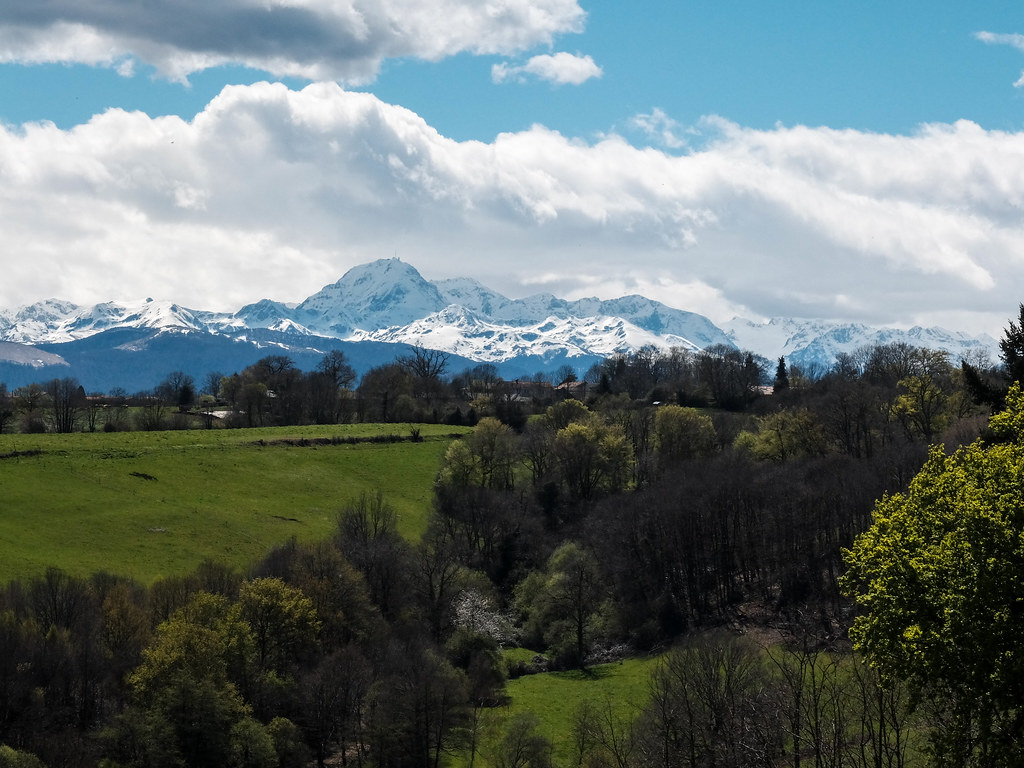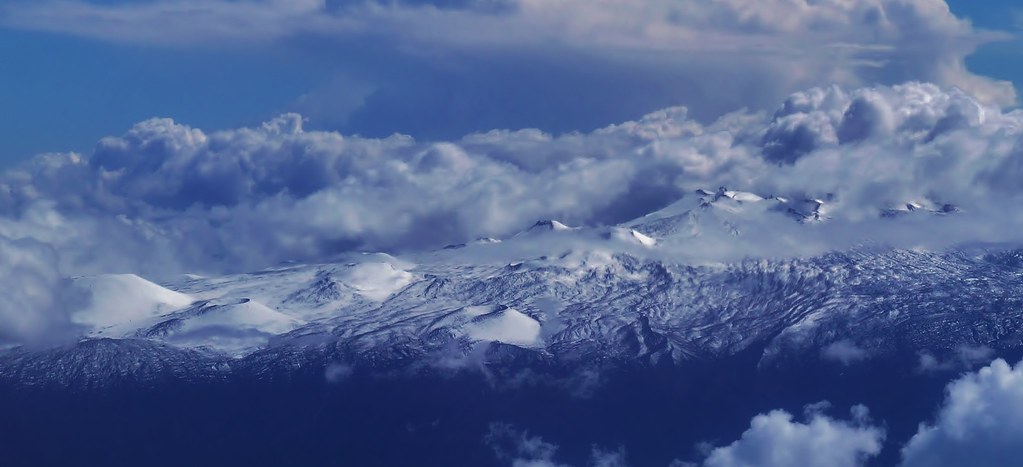
The Mauna Kea Visitor Information Station sits at 9,200 feet on the southern flank of the dormant volcano, beside the gravel turnout where most visitors stop. From its parking lot, on a clear evening, the summit's thirteen white domes are visible above the cinder cones.
Since the Mauna Kea Stewardship and Oversight Authority assumed full management of the road in July 2023, the rules for reaching the summit have changed. Casual driving past the visitor station is no longer permitted after sunset. Tour vans require a specific permit. Private vehicles must have four-wheel drive and an interview with a station ranger.
The change was reported in the mainland press as a closure. It is not a closure. It is a restriction calibrated to a place that had become, by most accounts, unmanageable.
On the night of April 19, 2026, the visitor station logged 184 vehicles arriving between 4 p.m. and 9 p.m. Of those, eleven received permission to continue to the summit. Six of those eleven were observatory staff vehicles.
The ranger on duty, Kahiau Akana, conducted the summit interviews in the station's south room. The interview is twelve to fifteen minutes. It covers driving experience at altitude, the visitor's medical condition, the cultural significance of the summit, and the rules for behavior above 13,000 feet.
The rules above 13,000 feet are extensive. No food. No drone flying. No nighttime photography with flash. No leaving the road or marked turnouts. No removal of any rock or soil. Conversation at the summit pull-offs should be at speaking volume, not louder.
Akana asked each candidate why they wanted to go up. The most common answer was to see the sunset. The second most common was to photograph the Milky Way. The third was to visit Keck or Subaru, which Akana noted gently are not open for casual tours.
The new restrictions follow a long contested period. The 2019 protests against the Thirty Meter Telescope project drew international coverage. The TMT project remains on hold. Whether it will be built on Mauna Kea, on an alternative site in the Canary Islands, or not at all is unresolved as of mid-2026.
What the restrictions have produced, in the observatories themselves, is a quieter working environment. Doug Simons, the longtime director of the Canada-France-Hawaii Telescope, told Nature in February 2026 that summit nighttime traffic had dropped by roughly seventy percent since 2023.
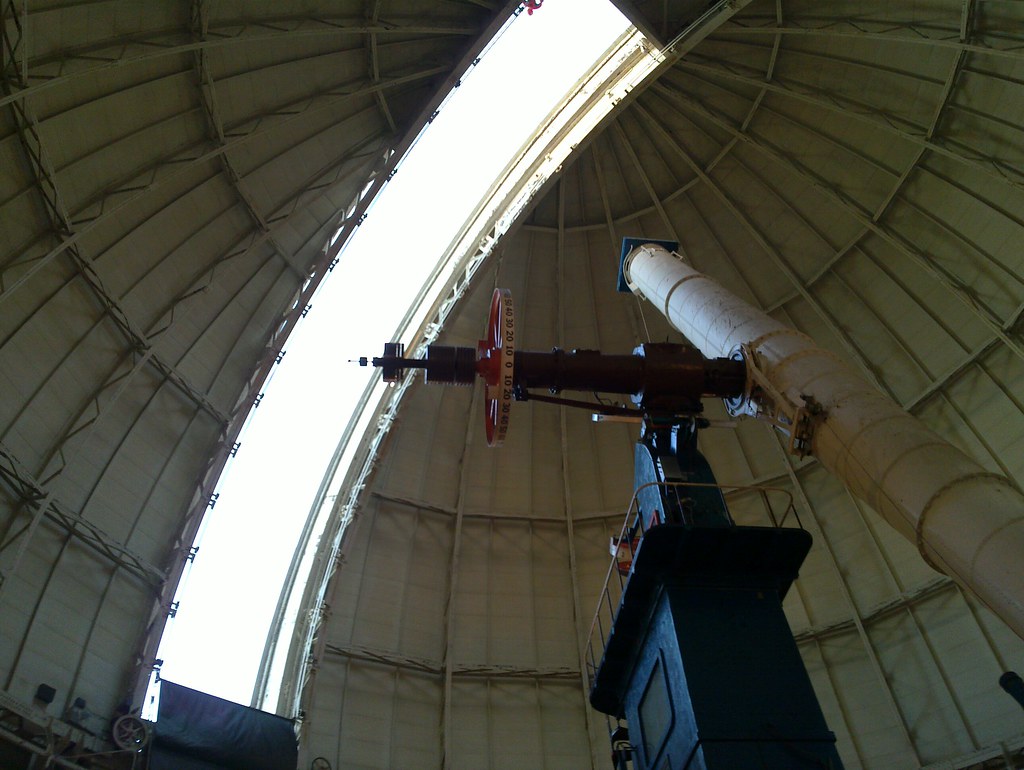
That drop matters for working astronomers. Headlights on the access road scatter into observing domes through the small gaps in the dome shutters. The reduction in traffic has measurably improved the dark-current floor on at least one CFHT instrument.
The restrictions have not been universally welcomed. Tour operators in Kailua-Kona who once ran nightly summit-stargazing trips have lost their primary product. Some have shifted to lower-elevation stargazing programs at the visitor station itself, which conducts a regular public telescope viewing four nights a week.
On the April evening, the visitor station's public program ran from 6 p.m. to 9:30 p.m. with three telescopes set up on the deck. Two were 8-inch Dobsonians, one a 14-inch SCT. The objects on offer were Jupiter, the Beehive cluster in Cancer, and the Sombrero Galaxy in Virgo.
Roughly eighty visitors stopped in. Most stayed forty minutes. The station's staff, half of whom are Native Hawaiian, explained both what was visible in the eyepiece and the cultural significance of the summit above. The two explanations are taught alongside each other now, not as competing claims.
The Stewardship Authority's enabling legislation, House Bill 2024 of the 2022 Hawaii state legislature, transferred management of the mountain from the University of Hawaii to a thirteen-member board with representation from Native Hawaiian cultural practitioners, scientific institutions, and the state. The transition completed in mid-2023.
How the board's decisions affect the existing observatories over the next decade will determine the future of Mauna Kea as a working summit. Five of the thirteen current facilities have leases that expire before 2033. Whether those leases are renewed is the board's decision.
UKIRT, the United Kingdom Infrared Telescope, decommissioned in 2014 and transferred to a University of Hawaii consortium, ended scientific operations in 2025. Its dome is now a candidate for full removal. The Authority has signaled a preference for clearing decommissioned structures rather than repurposing them.
Akana finished her last summit interview at 8:42 p.m. The candidate was a postdoctoral fellow from the University of Tokyo who had flown in for two nights of observing time on Subaru. She had a written letter from her host institution. She drove up at 9:05 p.m. with a station-supplied radio.
The visitor station closed its public program at 9:30 p.m. The telescopes were broken down and stored. The last cars left the parking lot by 10 p.m. The mountain above was dark except for the slit of light from one open dome.
Mauna Kea is not closed. It is more carefully managed than it has been at any point in the last forty years, and the working astronomers above the 13,000-foot line are, by their own accounts, getting cleaner data because of it.